Featured

Secondary School

My next school was the Girls’ High School.  That school was in its final years before the changeover to the comprehensive system, and the upper school was already under construction.  Nevertheless, the school kept to its old-fashioned organizational and disciplinary system, so the all-girls school had four houses with a system of house points and merit points, and a very strict uniform policy. 

The winter uniform was so extensive (blazer, beret, raincoat) that I couldn’t have much of it because we couldn’t afford it!  In summer, a fabric was selected and we could have our own summer dresses made.  Shoes were always flat and practical, black or brown, and mum took us to Clark’s twice a year to be fitted for school shoes.  I was so shocked when I came to Turkey and the shoe stores would ask us what size our children’s feet were – no measuring or fitting at all.

I was at that school for two years and at that time I was beginning to grow up and take an interest in pop culture; my love for David Bowie definitely started at that time and I clearly remember Ziggy Stardust pin-ups from the centre of girls’ magazines.  I wasn’t very discriminating; I also liked Donny Osmond and the Sweet!

We started learning French at the high school, and had a school trip to Paris with Mr Bigg, the French teacher.  We visited the Eiffel Tower, Champs Elysées, l’Arc du Triomphe and Montmartre.  Memories are hazy, but I do remember Sacre Coeur and the buzz of Montmartre, and being allowed to drink red wine – at eleven years old!

The old school had individual wooden desks with lift-up lids, inkwells, and depressions for pens and pencils.  I put my packed lunch inside my desk, and every day when I went to eat it, it would be gone. I never told anyone, so I suppose I went hungry. Even though I knew who was probably bullying me, I nevertheless made every effort to be accepted by that group, since they seemed to me to be the “cool” ones. 

Although I was clever, I didn’t want to be associated with the swots.  For the most part, they were the wealthier children from big houses in the countryside and surrounding villages.  I didn’t aspire to be like them, I was more concerned to fit in with what I think I perceived to be my socio-economic group. 

In fact, the girls I admired were bullies who walked around in cliques and delighted in being anti-social and rebellious.  Even while the bullying towards me escalated and continued, I still wanted to be like them and liked by them.  I was always on the periphery of their group and not quite accepted.  Their taunts were the reason why I started smoking at 13, and why I started plucking my eyebrows, much to mum’s dismay.

I enjoyed English, history, and geography, but I didn’t liked sports.  I preferred athletics to team sports; even though I wasn’t very good at most of the disciplines, I was only responsible for myself.  In netball and hockey I dreaded the feeling of being a let-down, and the possibilities that presented for bullying later.  I wasn’t the last to be picked for a team, but I was never the first, either.  Netball just struck me as a heap of petty rules that spoiled the flow of the game, while hockey was always freezing cold and muddy, with black and blue ankles for good measure. 

I was quite good at middle distance running, so I enjoyed the track events and later I liked cross-country running, although by then I had started smoking, and a cross-country was more often an opportunity to skive off and smoke with friends under one of the newly-built footbridges on the Springlands estate.  We got caught once, by a female teacher who drove around the course to check up on us, but I don’t remember the consequences.

By this time, I was at Sudbury Upper School, in the second year of intake for this brand new, state-of-the-art comprehensive school, and I loved it.  The bullying had largely stopped by now, and I wasn’t afraid to be seen as clever, frequently coming in the top three (with Glenn Parker and Colin Mathieson) for exams. 
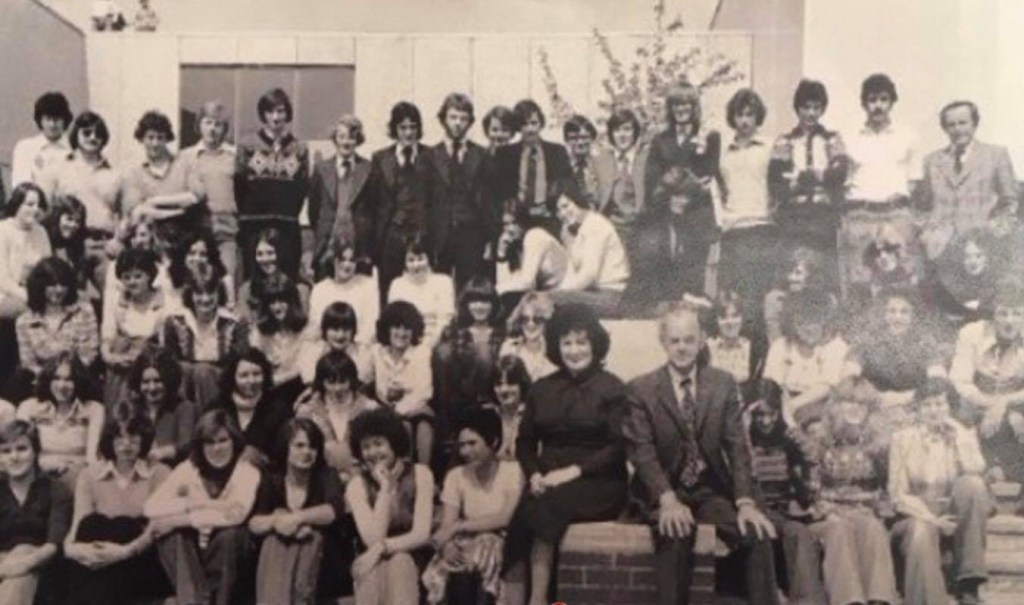
6th form leavers photo, 1978

The school had everything: six science labs, a gym, a sports hall, a swimming pool, tennis courts, 3 or 4 football/rugby/hockey pitches, a carpentry workshop, needlework and cookery classrooms fully equipped, a huge art department with facilities for pottery, sculpture, and printing, and a theatre. 

We also had some fabulous teachers: Richard Penny, Mr Fraser and Mr Holden for Geography, Clive Waddington for History (I didn’t like Mr. Britten), and in the sixth form, Mr Faulkner and Charles Lamb for English.  Pre sixth form, there was Mrs Knock for maths, and Mr Copp for French. I took advantage of everything I could.  I selected mostly arts and humanities subjects for O levels, but I remember the Chemistry teacher trying to persuade me that I could succeed at sciences and not to give them up.  I selected biology because you had to continue one science up to age 16. 

During my time at the Upper School, I had a Danish penfriend, called Anna (I wish I could remember her surname).  When I was about 14, we went on an exchange trip to Denmark. I enjoyed the freedom and friendships on the trip, and loved their family home and how welcoming they were, but again, as I had with the better-off school friends, I did feel out of my league.  When the Danish group came to us, we took them to the local youth club, and I think we had a trip to London with them, but I remember little else except how to say “I love you” and “thank you for the meal” in Danish, and the hilarious names of some of the sweets: “Spunk”!
Featured

Routines

Counting the money was a major part of doing the papers.  I’d watched Dad on a Sunday afternoon for so many years, as he spread newspaper on the table and emptied out all the leather moneybags, that when it came to my turn I barely needed any instruction. In turn, I picked out each denomination of coin from the heap on the table, and counted them into neat piles – twelve pennies in a pile, twenty shillings – then arranged them into ranks like soldiers on parade.  Then we packed the coins into little paper money bags ready for the bank. 

The coins were so distinctive then; threepenny bits and sixpences, pennies and shillings. There were also two-shilling coins, called florins, and two-shillings-and-sixpence coins, called half crowns, but they were discontinued in the late sixties, before decimalisation.  There were notes for ten shillings, and for a pound.  A guinea was 21 shillings, and although there was no guinea coin or note, luxury goods were often priced in guineas in the shops.

We always went home to a full roast dinner on Sundays. Whether we had beef, pork, lamb, or chicken, there was always Yorkshire pudding, roast potatoes, vegetables, and gravy. Mum did most of the prep the night before, and the oven came on with a timer while we were out.

Often, dad would fall asleep in the chair on a Sunday afternoon, his glasses sliding across his face so he looked like Eric Morecambe, but sometimes, especially in spring or autumn, we’d all go out again in the afternoon to collect nuts or berries.  We collected cobnuts, elderflowers, elderberries, and blackberries in their seasons. 

The elderflowers and elderberries were used for dad’s greatest hobby, wine-making.  He always had several glass demijohns in the pantry, fermenting away, and I can picture him sitting over great plastic bins of liquid, stirring with a long wooden stirrer.  He made wine from wheat, oranges, apples; whatever he could get hold of cheaply or free!  Trays of less than perfect fruit from the market stall where mum worked, picked up at the end of the day, or sacksful of elderflowers that we’d collected.
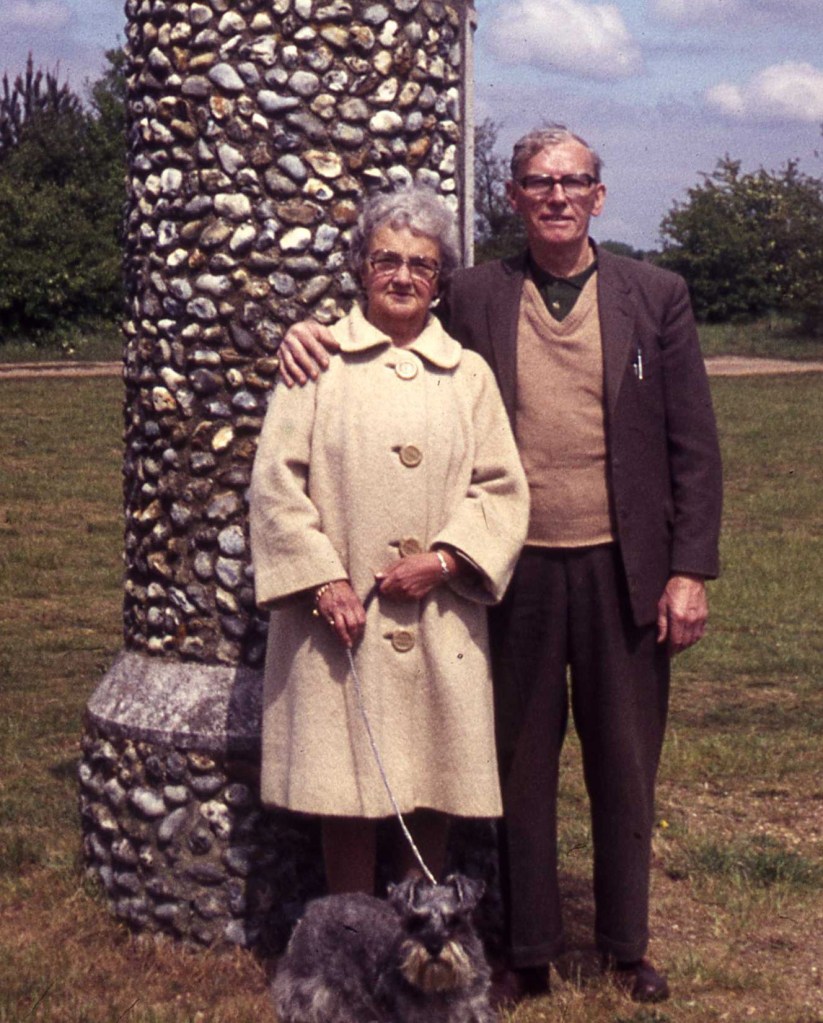
Sometimes the smell of the fermenting fruit was overpowering. He was incredibly proud of his wine, and would check the bottles of a new batch for clarity like a connoisseur.  Each bottle was carefully corked and labelled; each step of the process a perfect ritual.  His wine was always good, sometimes exceptional, and at those times he’d pour a glass, hold it up to the light, take a sip, and say, “it’s the best I’ve ever made.”

Dad liked routine and was not really very suited to having four small, noisy, unpredictable children in the house.  He was a perfectionist; whatever he did, he was concerned to do it to the highest possible standard, so that, for example, although he only decorated very rarely, when he did, his work was superb.  In the evenings he would sit and watch television, with a cigarette constantly in his hand.  He watched football and the news, and he loved Morecambe and Wise, and The Two Ronnies.  He also watched Benny Hill, I think, and variety shows from London theatres, as well as wildlife and nature shows such as David Attenborough, and One Man and His Dog, about shepherding. 

Mum would sit with him after she’d finally finished her housework for the day, and was usually asleep in the chair within minutes.  They both drank sherry or wine every evening; when I was smaller, I’d be sent round to the wine merchant’s in East Street to refill a container with cheap sherry.  How did I carry that?  Mum didn’t smoke, but she was given a large box of Sobranie Cocktail cigarettes each Christmas, which I thought were incredibly glamorous, and she’d smoke one of them now and then.

Strangely, mum is a less clear figure in my childhood memory; she was always there, and always working.  She was busy constantly and would never sit down during the day, except on her daily visit to her mum at coffee time.  Her life was bound by other people’s needs and expectations: Nan wanted her round for elevenses every single day, Dad wanted his lunch on the table the moment he walked in at lunchtime every day. 

Nan & Ted, around 1980?

For a long time when I was small, Nan lived at 57 Queen’s Road, and it was fairly easy to walk there from Newman’s Road, through the alley and past the laundry, which had a very distinctive smell of wet washing.  Nan made coffee according to a peculiar ritual, in a little brown jug set in a small pan of simmering water on the gas.  She always ground the beans herself, freshly grinding just enough for that day’s coffee.  When it was ready, she used a strainer to pour it into the cups. 

She had nearly always baked something: scones or biscuits, sometimes a cake, although cake was probably for tea in the afternoon.  Her days ran like clockwork, and she and her husband Ted would say the same things to one another at the same time each day – shall I put the kettle on, Nell?  Morning coffee was at eleven.  Mum rarely relaxed and enjoyed coffee time, she was always thinking about the next thing.  When Dad was on days, she had to be home at lunchtime because he came home for lunch.  He expected his food to be ready, on the table, as soon as he had washed his hands.

Featured

The Sunday Papers

I’d already had a paper round for several years before I got a daily one in Sudbury as a teenager.  When Dad gave up the village shop in Lavenham and moved to Sudbury, he didn’t give up the Sunday newspaper supply and deliveries.  From before I was born, he would get up before first light on a Sunday to sort the newspapers that had been dropped on our doorstep, then drive over to Lavenham to deliver them there, and in Brent Eleigh and Preston St Mary, too.  In the very early years, I think he cycled the whole way!  By the time I was four, I’d started to go with him on some Sundays, and when I was eight or nine, I had my own regular Sunday round, on a little estate of council houses in Lavenham. 

After a while, that round was totally “mine”. I got the papers from Dad, collected the money from my customers, and kept a ha’penny (half penny) per paper and a ha’penny per house for myself, paying all the other money back to Dad.  This must have been in the very late sixties and I was ten at most, because it was pre-decimalization.  Before decimalization in 1971, there were 12 pennies to a shilling, and 20 shillings to a pound; that’s why we had to memorize our multiplication tables up to 12×12 at school.

Within a few years, “the Sunday papers” was a whole family activity.  Mum would sit in the van (a VW camper) on the Market Square, selling newspapers to regular and passing customers, and keeping us supplied with cheese sandwiches.  The rest of us would be out on deliveries, sometimes solo and sometimes with Dad.  There were times when we absolutely hated the early morning start every Sunday, especially in winter when it was cold and dark; we were often really freezing cold.  Other times, though, it was lovely being involved in something all together, and also spending time with Dad. 

He had known the area and many of its inhabitants since his childhood; his sister Kit lived in Lavenham (in the newly-built replacement alms-houses by the church?) and he’d grown up there in the village.  He also knew the countryside intimately; he could tell the names of dozens, if not hundreds, of different birds and plants (recognizing birdsong long before he saw the bird), and could spot other wildlife and point it out to you – pheasants, hares, squirrels, foxes, rabbits, and occasional deer. 

Driving around the country lanes with him was often a delight.  We would have Ed Stewart Family Favourites on the radio; silly songs like the Laughing Policeman and Right Said Fred, and others that I still love to hear when they come on the radio, like Grocer Jack (excerpt from a Teenage Opera). 

Dad had a wealth of stories and knew a lot of the history of the different houses and their occupants; it all seems dreamlike now.  There was a hall with a gatehouse in Brent Eleigh. Even then it was run down and almost ghostly, although it was occupied.  Some images of it – the overgrown driveway and the ramshackle, paint-peeling conservatory – still appear in my dreams. 

Our regular route took in a few pubs, and Dad had a drink in most of them!  He’d have been well over the limit these days.  The landlord of the pub in Brent Eleigh had enormous waxed moustaches that he was inordinately proud of.  I was allowed to go into the Six Bells in Preston, and have a soft drink and a bag of crisps to take outside.  The bar was much higher than I was; I couldn’t see over it. 

In the early seventies, Noel Edmonds moved to a little old cottage in Preston St Mary and renamed it Dingly Dell, the name he later used on his weekly radio programme.  Jayne and I were terribly disappointed that we rarely saw him and that he wasn’t nice when we did. He was so famous and popular at that time, but we soon decided we didn’t like him at all. It’s probably a good job we had no such thing as Twitter!

Featured

Memory Lane 1 – Lavenham

On a recent visit to England, Dinah and I spent an afternoon in the south Suffolk countryside with M and B, trying to track down places where Mum, Dad, or their parents had once lived. It was a clear and very cold afternoon, and our trip took us to Long Melford and Lavenham.

Although I knew about some of these places before, I wasn’t certain of any of the addresses, but having spent a few days during the holiday going through old letters and photographs, we had a little more of a lead, with some definite street names and house numbers to look for.

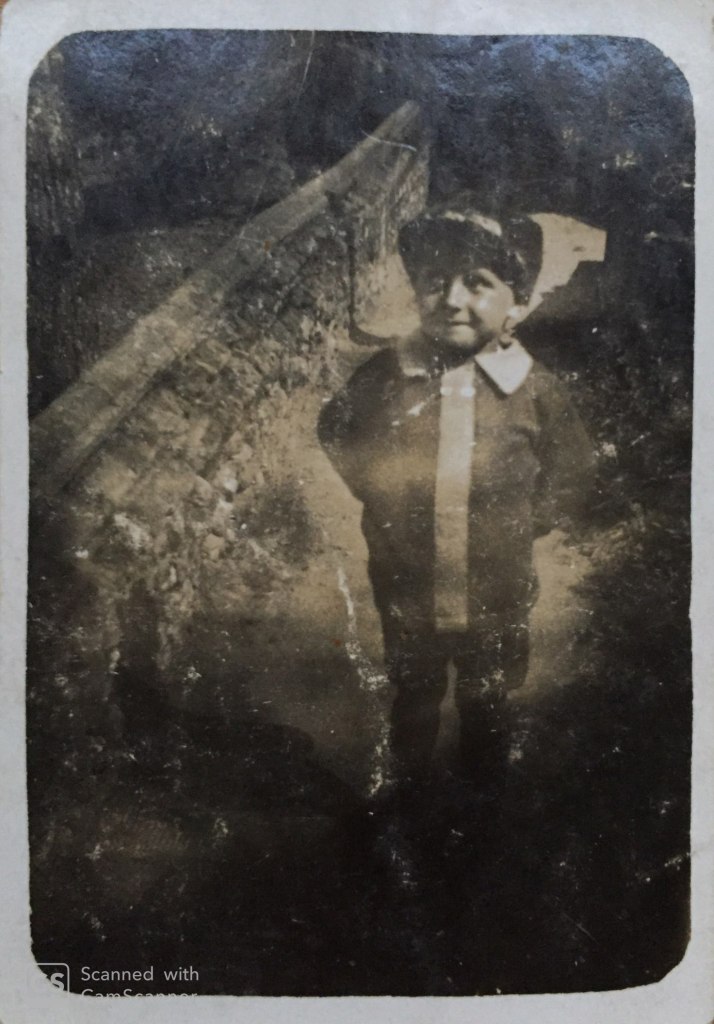
Harold Lambert, aged 4

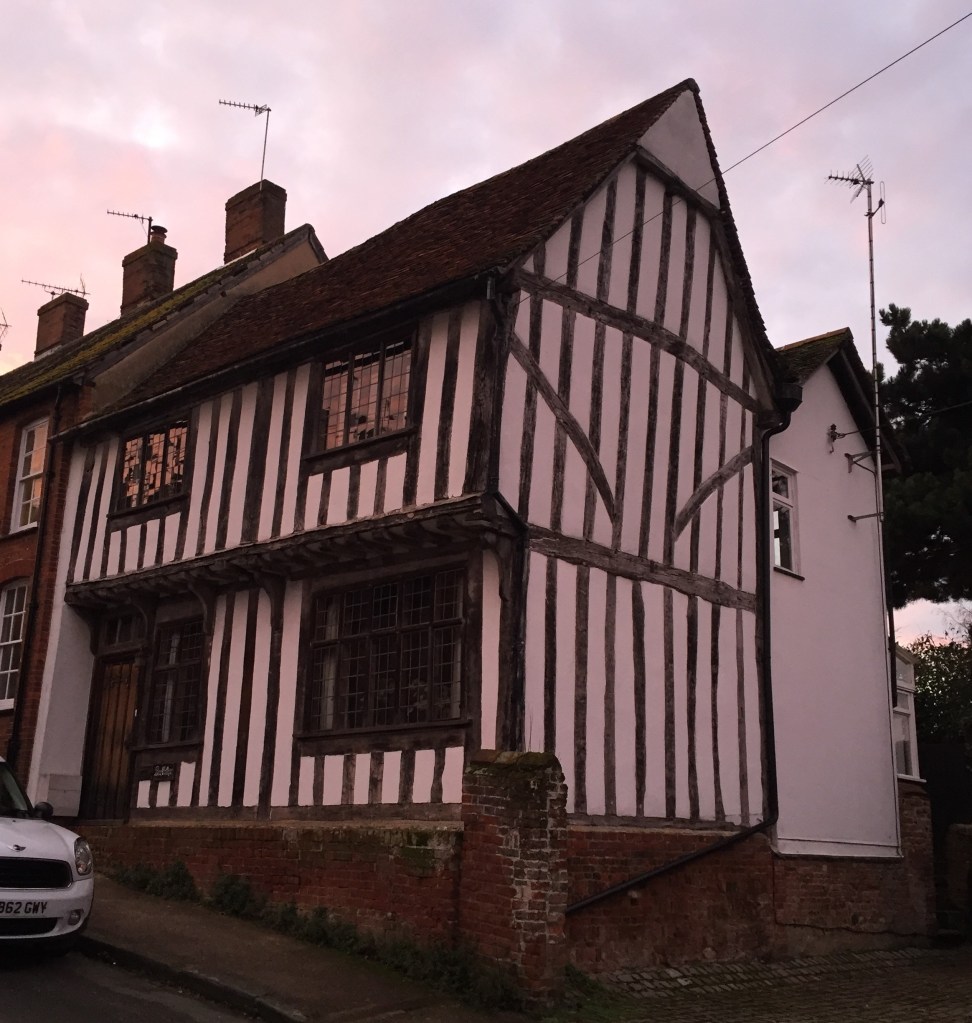
We started in Long Melford, and had some success, but I’m going to start in Lavenham. I know Dad was born and lived in Prentice Street, a fairly steeply sloping street leading off the Market Square. The photo above was taken there – on the back it says “Harold, 1927, 21 Prentice Street”. He would have been 4 years old. The address matches that on census records, and if the street numbering hasn’t changed, this is the house. The family still lived here in 1939.

21, Prentice Street

Dad’s eldest sister was 21 when he was born, so it’s likely that some of the older brothers and sisters had moved out of this house by the time Dad was born in 1923, but there were still quite a few children sharing one room.

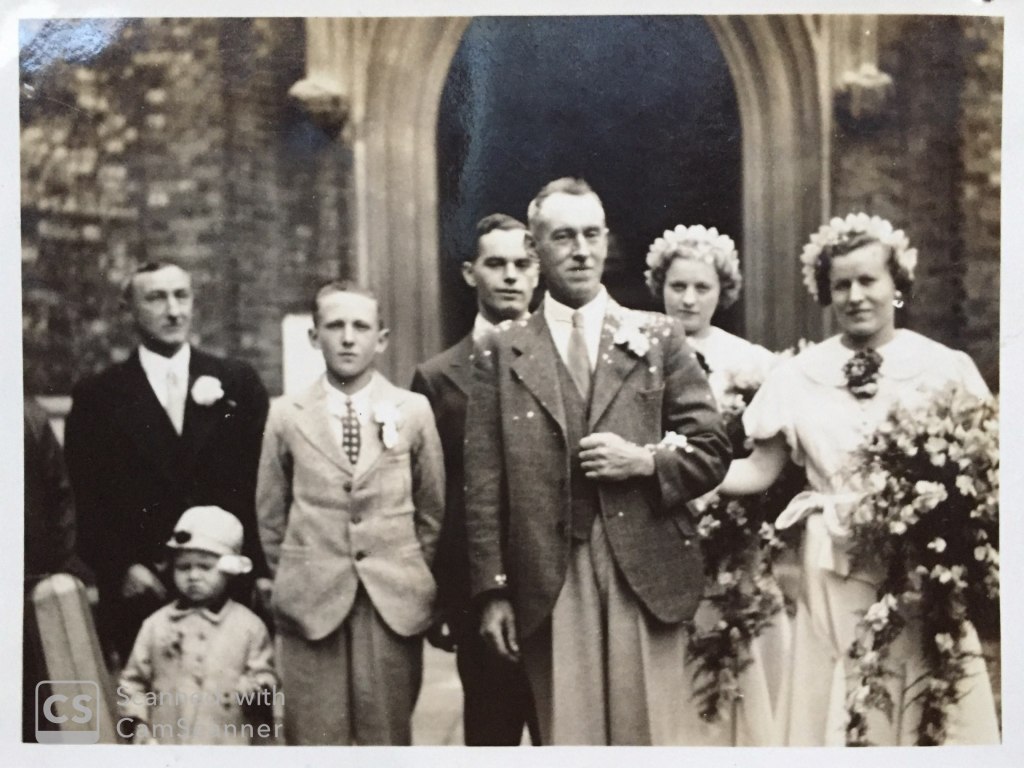
Here’s Dad at the wedding of one his sisters, Alice. She’s holding her father’s arm, and this is a rare photo of him. The date is mid-1930s, so Dad would have been around 12 years old, and Grandad in his fifties. I think the couple behind them are auntie Olive and her husband, Bernard. Alice had met her husband, Roy, in London, where he was a chauffeur and she was a chambermaid. She later returned to Lavenham, during the war, to look after her father.

Alice’s wedding

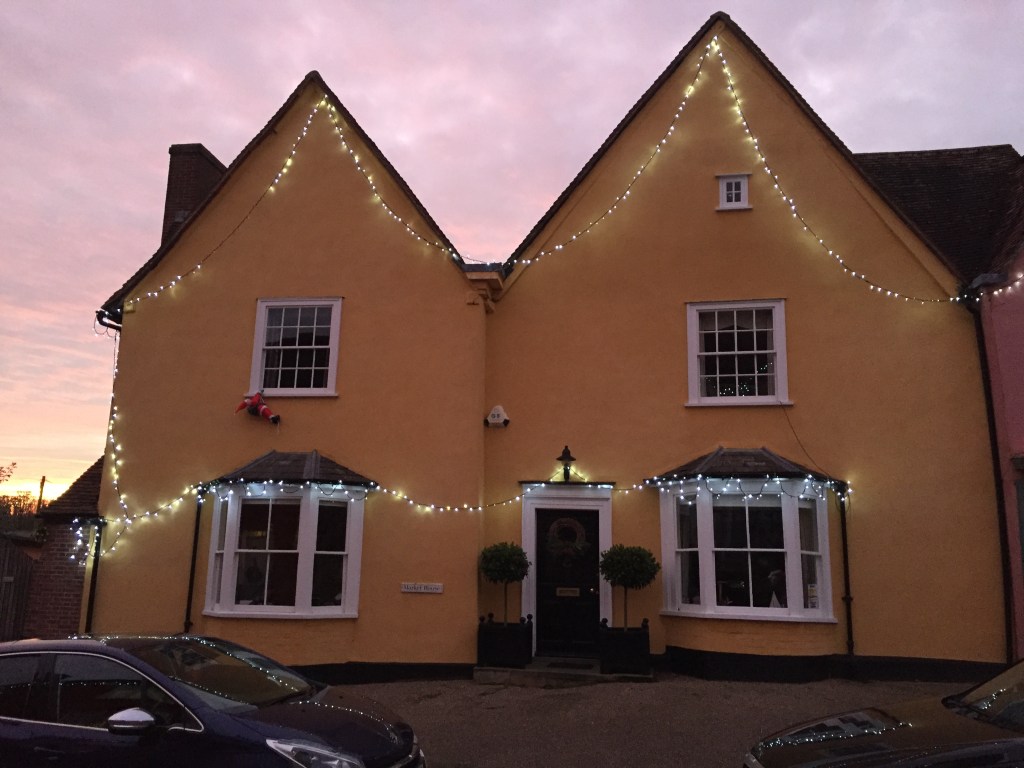
The other house we wanted to look at was 35 Market Place in Lavenham, which was Dad’s address on his marriage certificate in 1960. We think his sister Alice was the householder, but we don’t know if she owned the house. Certainly from my childhood I remember that we used a shed in the garden of 35 Market Place as a base for the Sunday newspaper rounds, and Dad always seemed very at home there. That shed now appears to be a beautifully converted little house.

35 Market Place

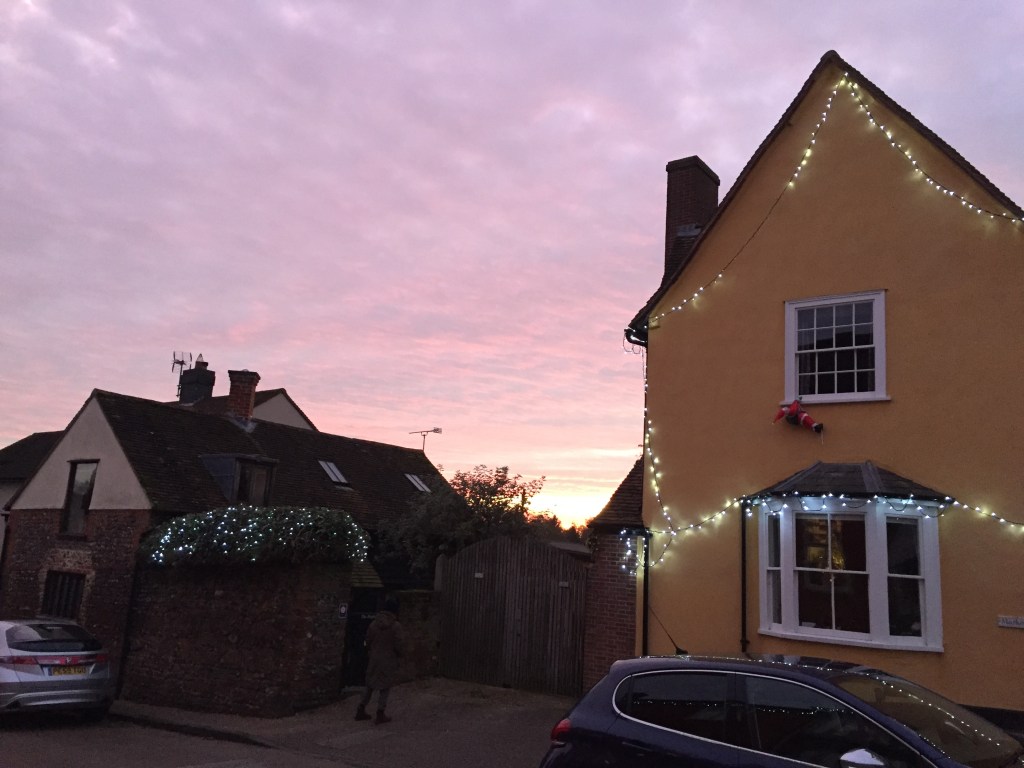
We had a lovely walk around the Market Square under a spectacular sunset.

The low building on the left was an open shed in the sixties – now it’s someone’s home!

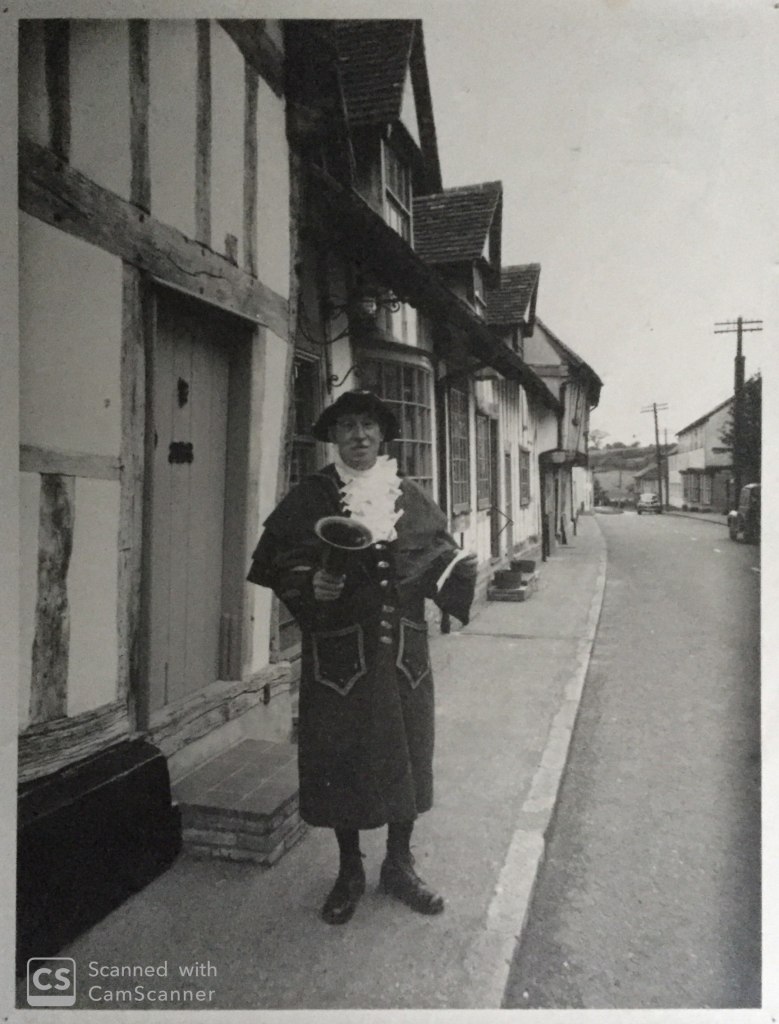
Finally, for this rather scattered post, a picture of my grandad in his finery as Town Crier in Lavenham. Perhaps this was a ceremonial position, as he held it in the late 40s, by which time there were telephones, wirelesses, and even a few televisions.

Grandad – Robert William Lambert 1881-1965

Lavenham’s fortunes have soared in the last 50 years but for most of Dad’s life it was a poor village with few opportunities, despite its past glories as the centre of the wool trade. https://www.discoverbritainstowns.co.uk/culture/cathedral/lavenham-suffolk-timbered/

Featured

Accidents

Although Mum didn’t work full-time when we were children, she did work: on the market on a fruit & vegetable stall once or twice a week, and a 4-hour early evening shift at CAV, although not at the same time.  We had a series of babysitters to look after us when Mum wasn’t there.  One of them, Lorraine, lived in the flats off East Street, I think, and she was also a hairdresser.  Sometimes, in the sixties, she’d come to the house to wash, set, and style Mum’s hair.  At that time, Mum had a hugely backcombed bouffant style for special occasions, with a little braid across the front above her forehead, to keep her hair off her face.  That definitely wasn’t her everyday look, though! 

I think Lorraine was at home with Mum the day I cracked my head open!  I was running into the house from the garden, through the conservatory, and the doormat slid across the floor as I stepped on it, pitching me forward. I lost my balance completely and my head made contact with the brick corner of the doorway.  I can still see blood colouring the water in a blue bowl on my lap, and a damp folded flannel held with both hands over the cut, frequently rinsed, wrung out, and re-applied.  

We didn’t yet have a telephone; I think I was carried to the doctor’s, all the way down Friars Street (though that may be an earlier memory).  The cut needed two stitches, and there was a fairly obvious purple and white scar in the middle of my forehead for many, many years.  It’s still there, although perhaps not quite as visible.  Jayne had a duplicate accident not long afterwards; her scar is hidden in her hairline.

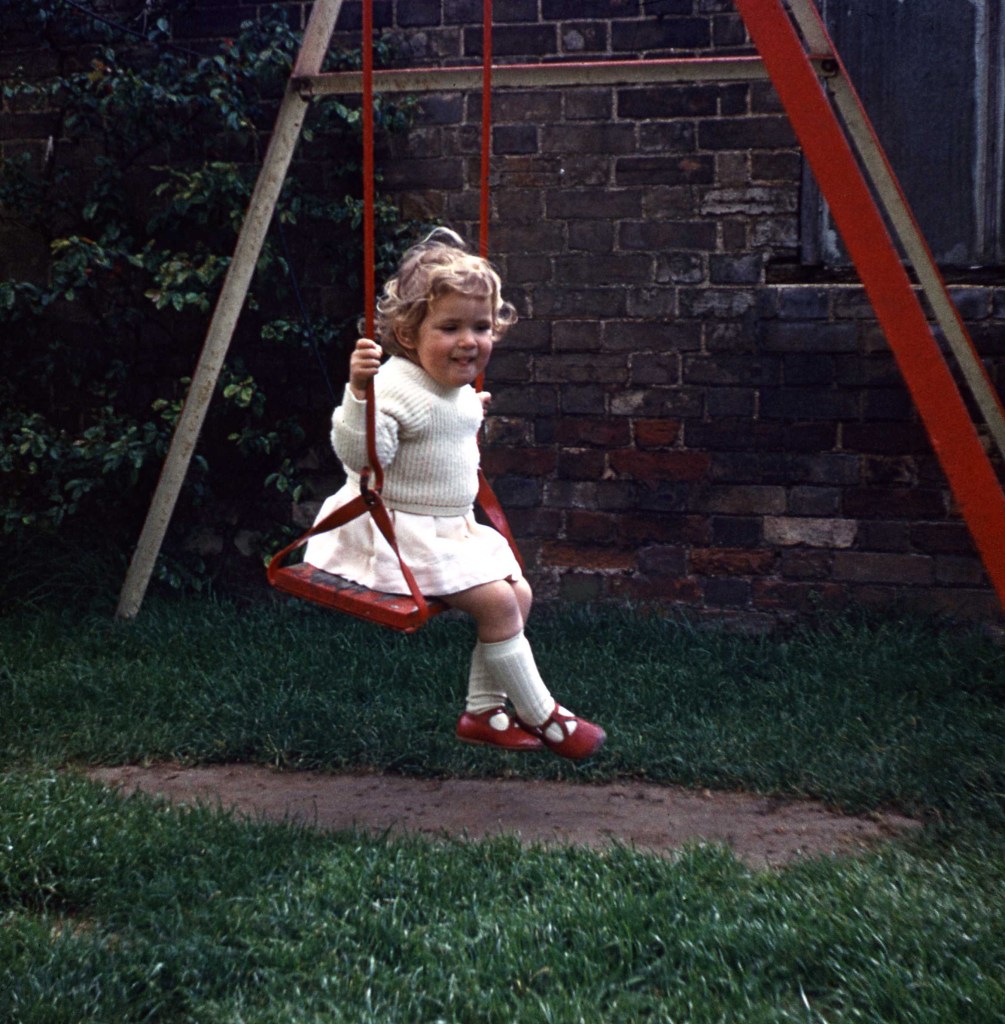
Dinah on the swing

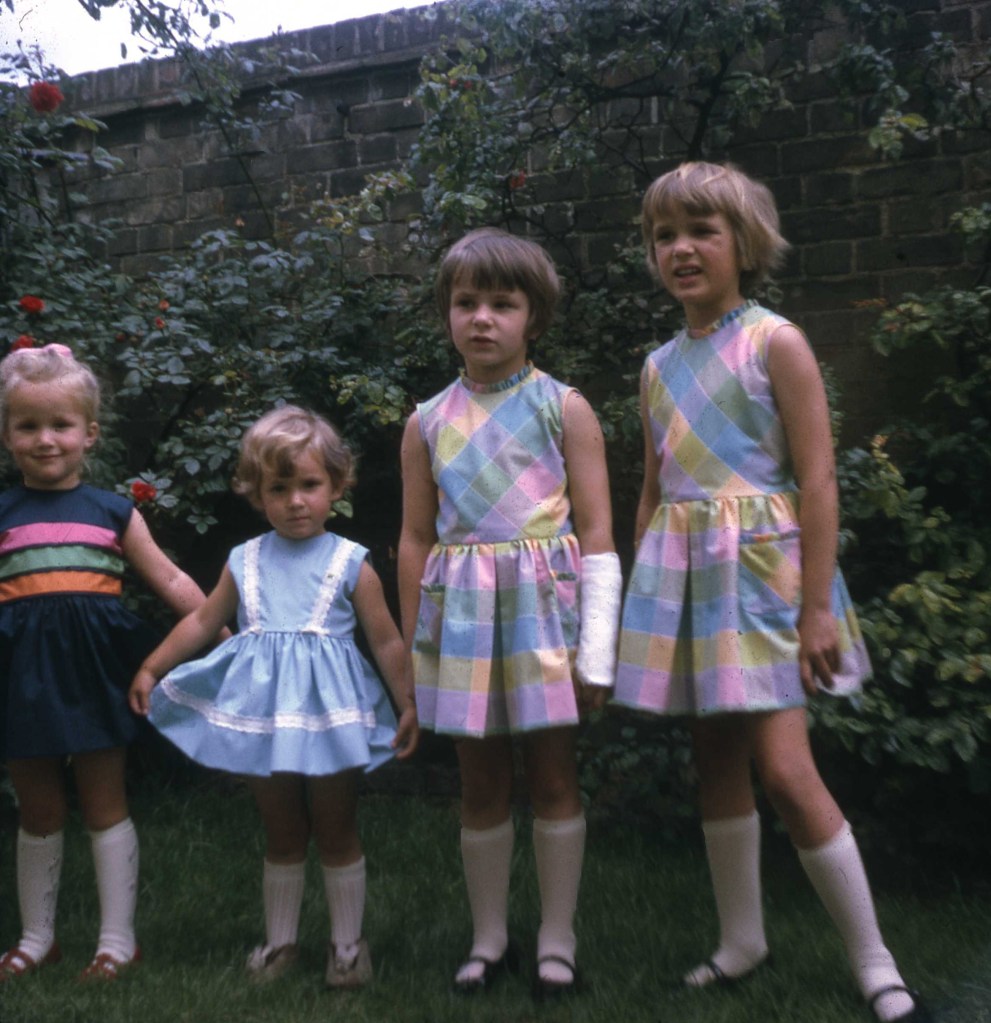
The biggest childhood accident in our house was when Jayne famously fell off the swing!  We were all outside, and Dad was just settling down in front of the television to watch football – the FA Cup final, I think!  The swing had solid metal bars to suspend the seat from the overhead bar, and although we weren’t allowed to stand on it, Jayne wanted me to hold the bars steady so she could climb up and stand on the seat.  Just as she got up to stand, she lost her balance and fell forward, landing awkwardly on her arm on the rock-hard dirt under the swing. She stood up and went running inside, while the three of us were stock-still, quite shocked at the accident and at the sight of her misshapen forearm. 

Jayne in plaster

Of course, the afternoon of football was ruined and Dad and Jayne spent the afternoon at A&E while Jayne was X-rayed and a cast put onto her broken arm.  Worst of all though, was that Dad thought he’d seen me push her off the swing, and she never did own up and put him straight, so it was my fault.

It was almost impossible to stand up to Dad, even when he was wrong, although in a much later incident, I didn’t back down.  We were at Priory Road, so I was a teenager, and I’d been with him in the garden helping to plant or dig up potatoes, I don’t remember which.  We were called in for dinner and I went into the cloakroom, the downstairs toilet, first to wash my hands.  I rinsed around the washbasin and hung the towel tidily when I’d finished, and went to sit at the table. 

Dinah outside at Priory Road, where Dad had a vegetable garden

A few minutes later, Dad sat down and accused me of not washing my hands.  I showed him my clean hands, and protested that I had washed them, but he insisted that I couldn’t have done because the washbasin and the towel were untouched!  The exchange escalated into a row and I ended up screaming at him and leaving the table without eating.  He never did come after me or follow it up; he must have known he was wrong, because he must have also known that I wouldn’t have dared behave in that way if he was right.

In Priory Road, we always sat together at the table for tea, our evening meal, and each of us always sat in the same place; Mum and Dad at either end of the table, me next to mum and opposite Jayne, Suze and Dinah next to dad.  Occasionally, meal times were really enjoyable, if Dad was in a good mood, and if us four girls were not arguing.  Then, dad could be light-hearted and joking, and we could all contribute to the conversations and talk about what we’d been up to in school and out of it.  Often, though, Dad would be in a bad temper over something, and the slightest noise, giggle, or perceived disobedience would set him off.  There was rarely a row, just an overbearing, ominous, bad atmosphere.

Dad worked nightshifts, a fortnight about (two weeks of days and two weeks of nights).  When he was on nights, he’d come home around breakfast time and go straight to bed. Before we had all reached school age, it must have been a nightmare for Mum, trying to keep us all quiet so he could sleep.  He expected silence and wouldn’t tolerate any disturbance. 

On one or two occasions when I was a teenager, he was more mellow and empathetic.  I had a paper round in Sudbury, but I didn’t have a bike.  I had to get up every day before school, walk down to the newsagent’s on the Market Hill, collect my bag of newspapers, and walk back up to Woodhall and Tudor Road to deliver my round.  A couple of times Dad drove back from work that way, and drove slowly around the round, with the heavy bag on the passenger seat in his car.

Of course, there was another accident that affected the whole family, especially Michael, but that deserves a post of its own.

Featured

Day trips

When we were children, we occasionally had family outings at weekends, and they were of two kinds.  Either we’d go out to forage for seasonal produce, most often ingredients for Dad’s excellent home-made wine, or we’d be all dressed up in our Sunday best to go for a drive to a picturesque country village.  Later on, after she’d passed her driving test, mum would sometimes take us on these trips, usually together with her mum, too.

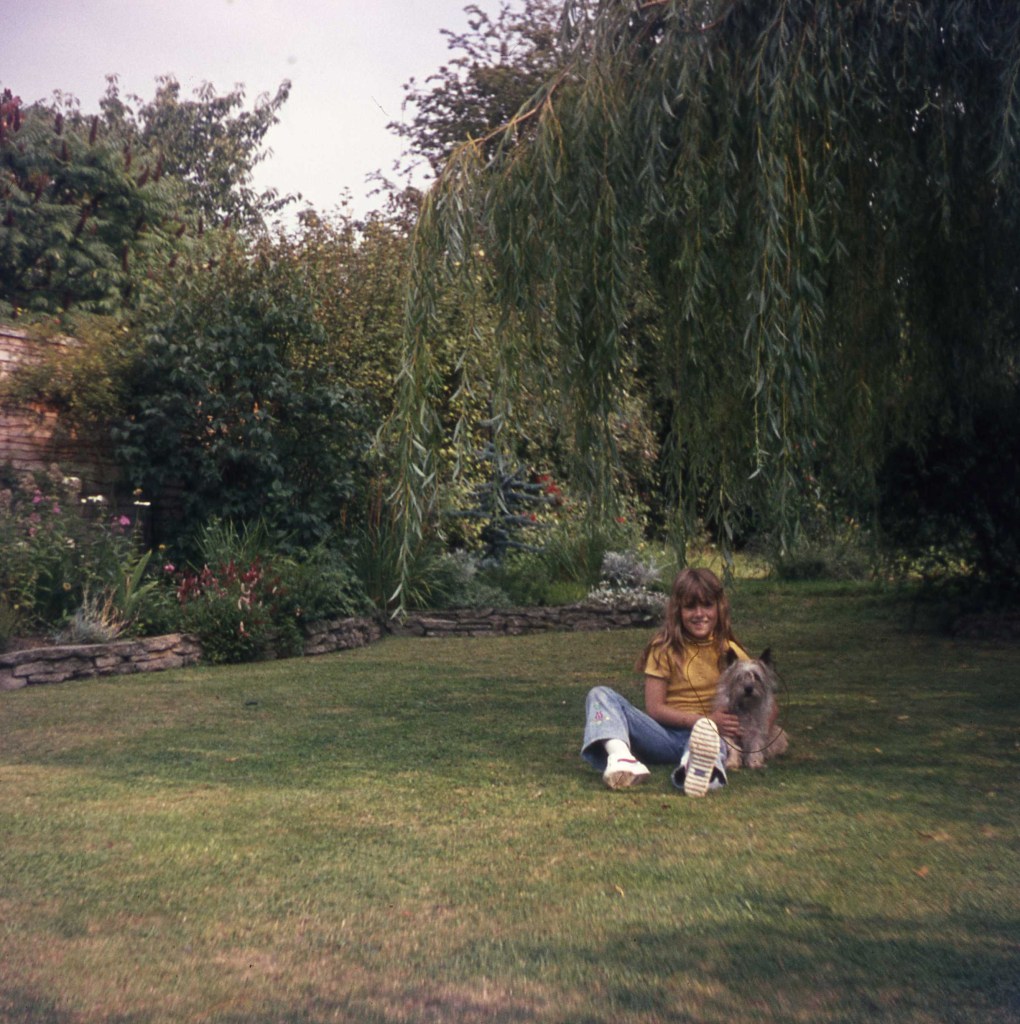
One of Nan’s favourite destinations was Thetford Forest, which was about the limit in terms of time and distance from home.  She’d always bring a trowel and a bag with her, I think to pick up fallen, rotting leaves to use as mulch in her garden.  We’d usually have dogs with us; certainly Nan would bring her Schnauzer, Judy, and we would have Sasha (Basil Watkins), Jayne’s first dog, and later Ella, which was Mum’s little Yorkshire terrier.

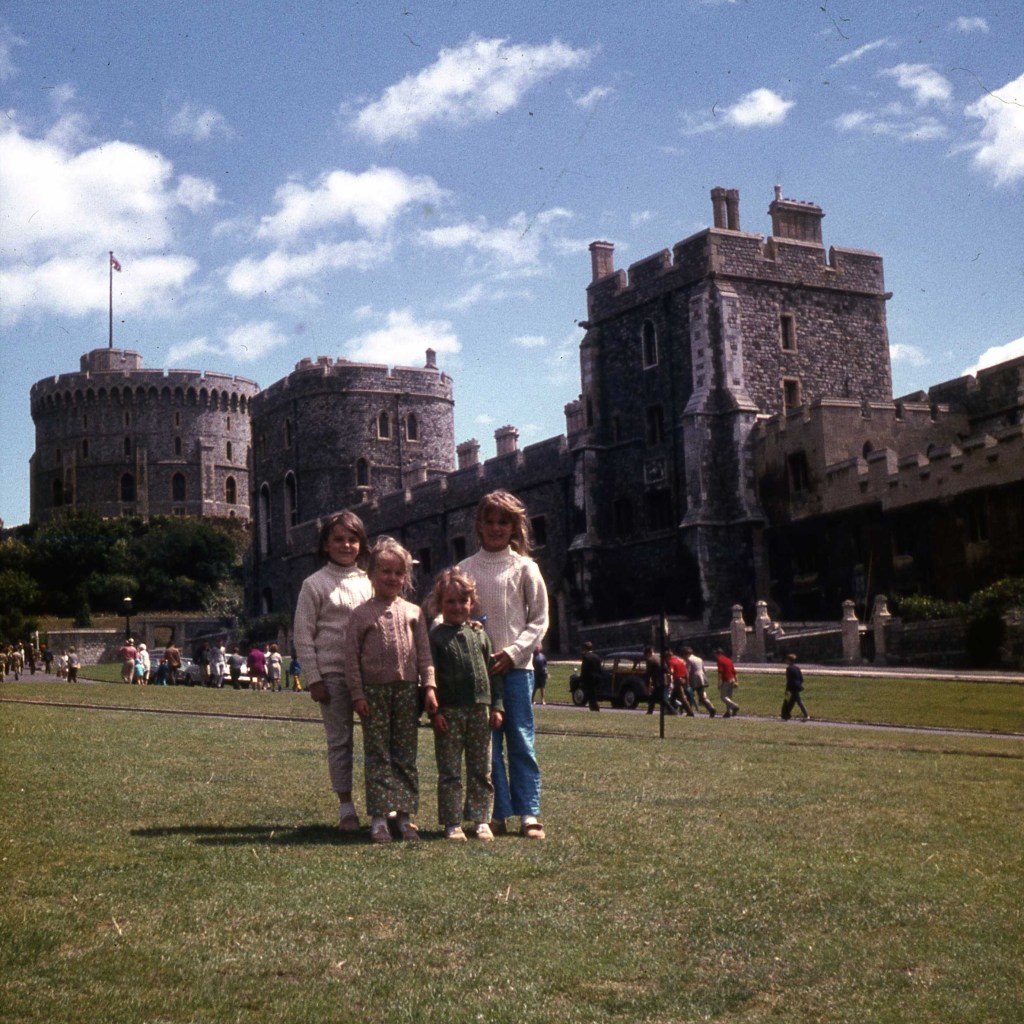
Windsor – if that’s our Morris traveller, it was indeed green, not blue!

We also had some trips further afield, Windsor Castle and Chessington Zoo, but I feel these were “on the way”, and incorporated into longer journeys.  We’d go to St Alban’s once or twice a year to visit Thelma and Ray, Suze’s godparents and Dad’s friends (he was with Ray in the army in the Second World War).  These journeys seemed interminably long to us children, and our constant question was “are we nearly there?”  We tried to pass the time with games such as “I spy”, but often got bored and squabbled in the back of the car as Mum tried to keep the peace so that Dad wasn’t distracted from driving.  In fact, Dad was quite good at pointing out landmarks, famous or otherwise, and telling stories about them, and as the routes became familiar, we would look out for these sights. 

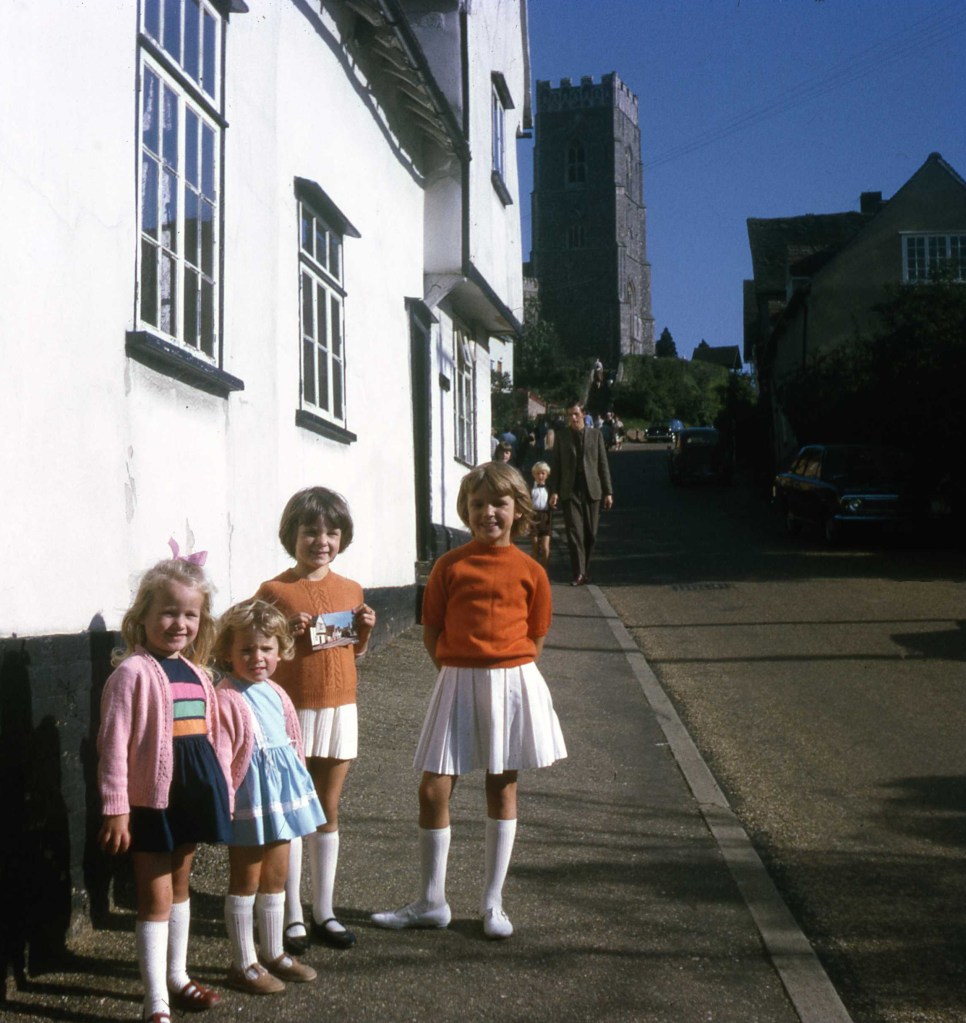
Closer to home, we sometimes drove out to a pretty village nearby, such as Kersey or Hartest, where we’d have a walk around.  Mum and Dad would probably have a drink in the local pub and we’d have lemonade and crisps in the pub garden.   Perhaps they had another reason for these outings, visiting people or looking at property, but I don’t remember it.  What I do remember is being dressed up and always on our best behaviour.

Kersey (?)
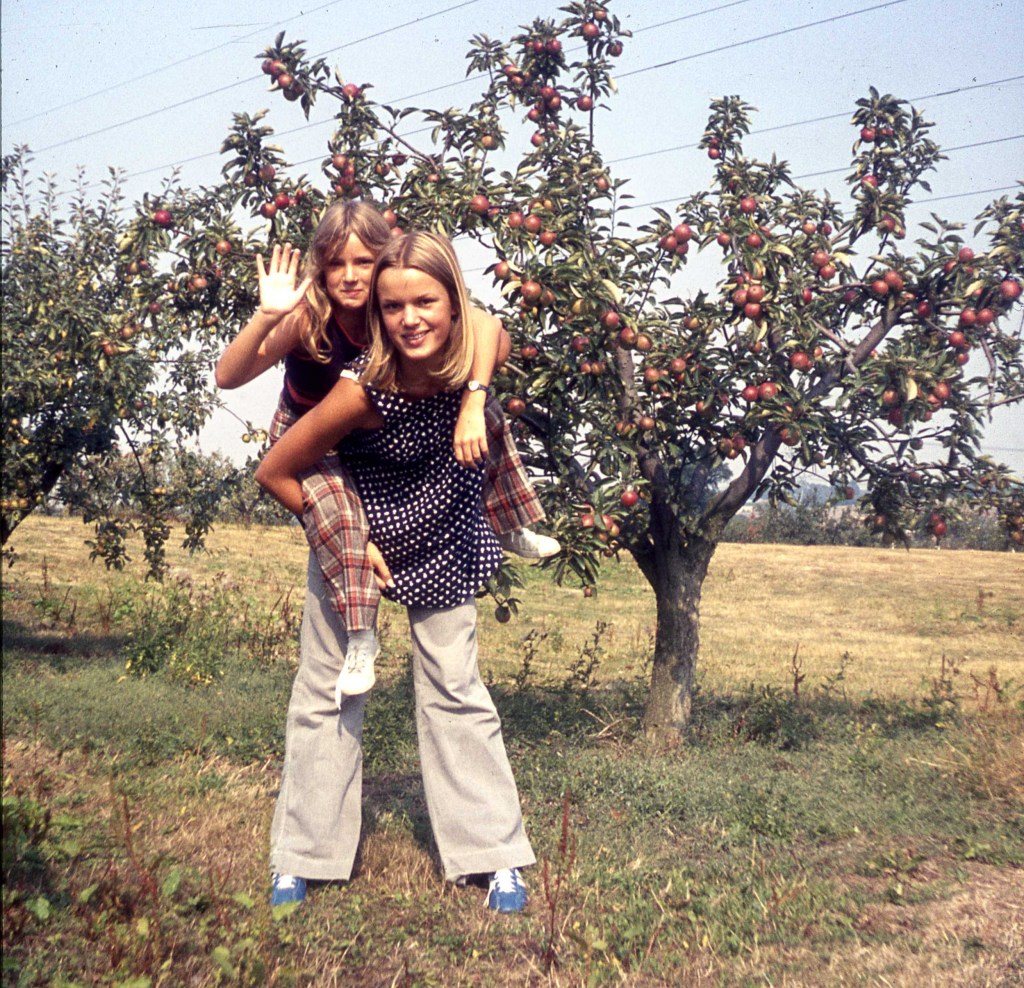
Pick your own apples

More memorable, and probably more frequent, are the trips out on a Sunday afternoon to collect free food from the country lanes and hedgerows.  We’d bring home elderflowers and elderberries by the sackful, and dad would use them for wine-making.  In season, we collected filberts or cobnuts, a type of wild-growing hazelnut, and blackberries.  We also went to pick-your-own farms occasionally, where we could go into the fields and pick fresh produce such as berries, peas, and apples.  As we got older, these farms were a good source of casual work, although each crop had its own difficulties and the work was always quite demanding, so you had to work at speed to make it worthwhile.

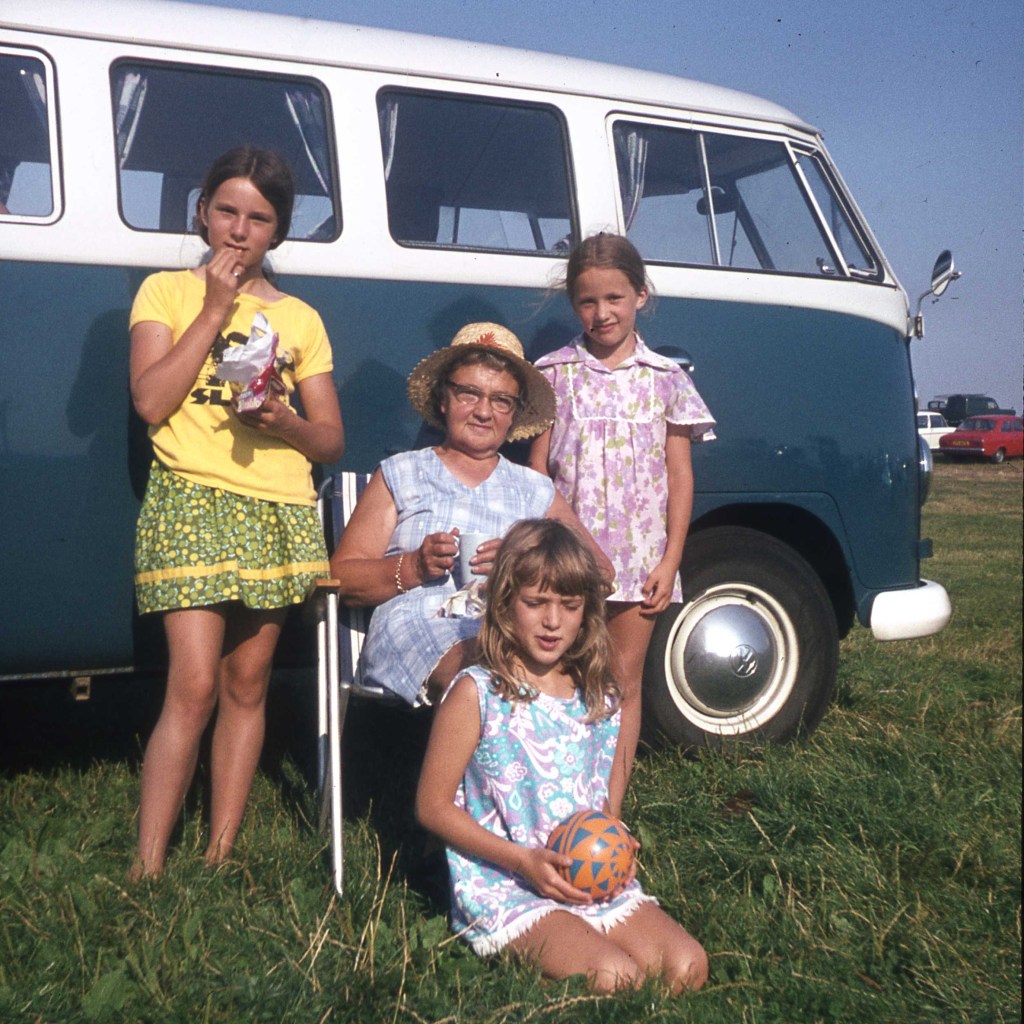
With Nan at the seaside

On hot days in summer, when we were a little older, we’d go to the seaside at Frinton or Holland-on-Sea, on the Essex coast.  The journey was about 30 miles from Sudbury, just under an hour in our VW camper van.  We parked on grass behind the promenade and spent the day in the sunshine, sometimes down on the beach and at other times on the grass by the van, probably depending on the tide.  Mum would have made a picnic of crusty rolls (from Chantry’s in North Street) filled with butter and cheese.  We’d then add our crisps to the sandwich and squash them – delicious!  The van had a table, a sink and a little hob to boil water for coffee and tea for the grown-ups, while we drank orange squash.  Once or twice, we rented a beach hut (or perhaps Nan did); I certainly remember using a beach hut to get changed and to sit and have a picnic.  Those are now hot property, and worth several thousand pounds.

Featured

School days

We always used to walk to school.  My first school was Tudor Road infants school, which is still there and now, I think, called Woodhall school. I don’t remember who my first teacher was, but I do have a few memories from there. There were benches and coat pegs outside each classroom, and we had to hang up our coats and take off our outdoor shoes when we arrived, certainly if it was bad weather and we’d walked in wellingtons.  We wore black plimsolls; everybody had the same, no fashion brands or competition. There were alphabet friezes around the classrooms (a is for apple, no phonics), and the tables were trapezoid – two tables together made a hexagon, and four or five children would sit in groups at each one.

I met children who were my friends and classmates throughout my childhood: Tanya Wicks, Celia (Ceci) Alderton, Janet Bird, and Jayne Cooper.  We had to go outside every playtime, unless it was pouring heavily with rain, in which case the whole school would be in the school hall. In the playground we’d run around, play singing circle games or hopscotch, skipping games, or sometimes climb on the climbing frame. If it was cold, we’d huddle together in groups.  There were “dinner ladies” in the playground, non-teaching staff who were on duty to keep an eye on us, and they nearly always had a string of children holding their hands. The school backed onto fields of wheat and you could see for miles across to Chilton.  The Upper School and Springlands estate weren’t yet built, so the school was on the very edge of Sudbury.

At 9 years old, I went to junior school at North Street.  We walked to the North Street school via the alley that ran along the side of our house and came out in Girling Street.  There was a lollipop man or lady to help us cross, as that was a busy road, even when it ended at East Street, before the “curly-wurly road” extension was built through to King Street. The school was demolished just a few years ago.

The headmaster was Mr Reed, and my class teacher was Mrs Loades.  Celia and Tanya were still in the same class, and Garry West, Gary Diggins, and Kevin Risley are the boys I remember from there.  Celia had an enormous collection of “trolls” which she used to bring to school occasionally. Once or twice I went to her house to play; she lived in a big old Victorian house along Cornard Road, next to the “dandycord” factory (now Sainsbury’s).  The house had a feeling of size and space, cool and dark and very still.

At that school, we had assembly every day, and we sat cross-legged in rows on the wooden parquet floor to listen. Assembly often included music; selections from classical LPs played on a record player, with some explanation from a music teacher about the composer and what he (always he) was trying to convey.  Together with these music spots, and a lesson called Music and Movement, I learned a little about music and heard some pieces that I still love: Peer Gynt – In the Hall of the Mountain King (Grieg), Fingal’s Cave (Mendelssohn), and the Pastoral Symphony.  Later, my love of ballet added more favourites, in particular, Prokofiev’s Romeo and Juliet with its magnificent Dance of the Knights.

Mrs Loades was my class teacher and my English teacher at North Street.  She allowed and encouraged us to play with the language, and we wrote poems in her class which we illustrated.  I know she thought I was good at English, and she was always full of praise.  Many, many years later, after I’d moved to Turkey, Mrs Loades met Mum in the street and stopped to chat. They arranged to meet again, and at that meeting Mrs Loades gave Mum a large brown envelope with about a dozen of my childhood poems in it; she’d kept them for all those years.

http://www.sudburysuffolk.co.uk/photoarchive/viewimage.asp?id=1210

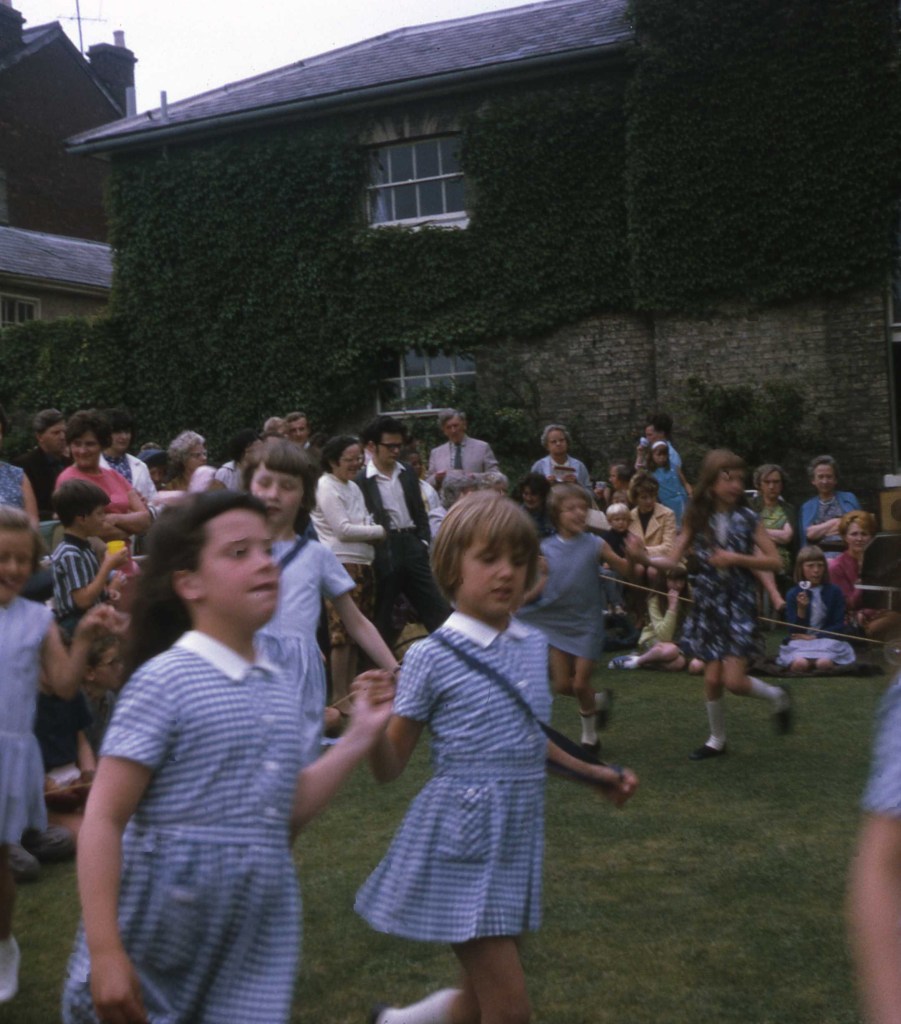
The link takes you to a photo of a weaving class in North Street School in 1968, and although I can’t identify myself or any others, I must have been there around that time. Sudbury was and still is a major weaving town, and is especially famous for its silks. I don’t know if that’s why we learned weaving, or if it was part of a national curriculum! We had lots of arts, crafts, and expressive, creative lessons – country dancing was another favourite, and here we are dancing in the extensive gardens of the old vicarage in Gainsborough Street.

Country dancing
Featured

Nanny Joyce

On the fifth anniversary of her leaving us, today’s memories are of my Mum – not from my childhood, but from the children’s.

1999

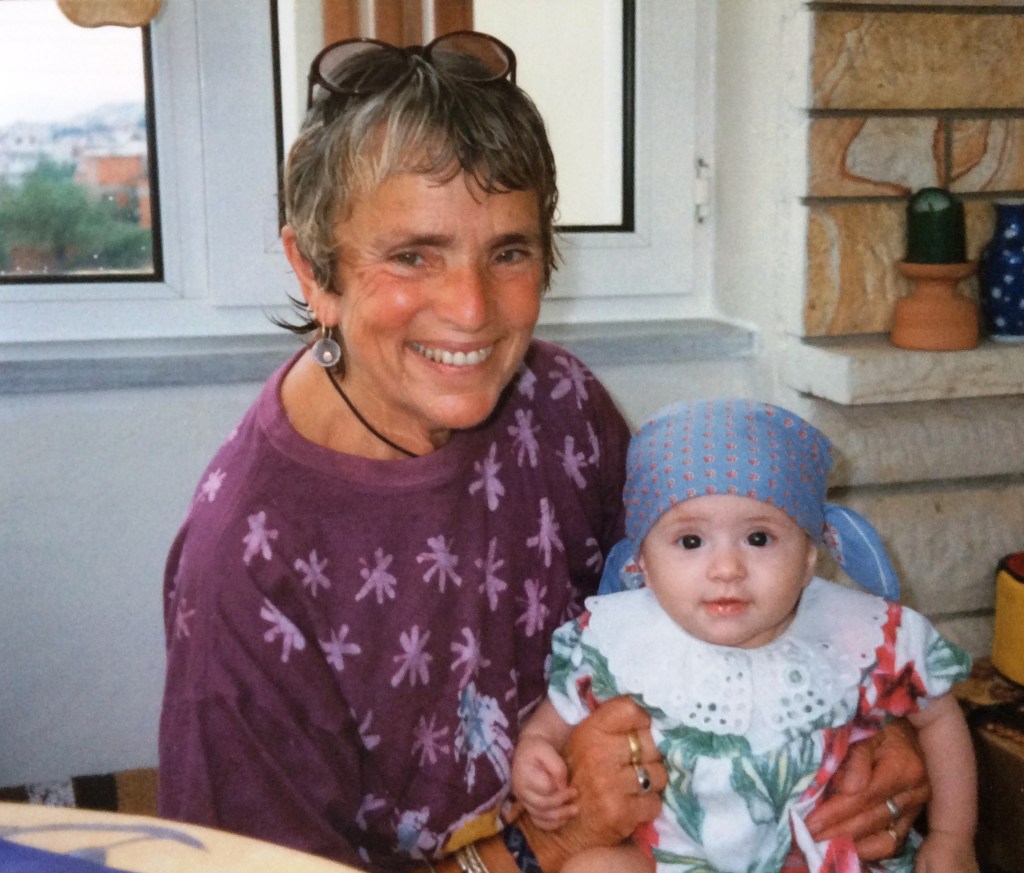
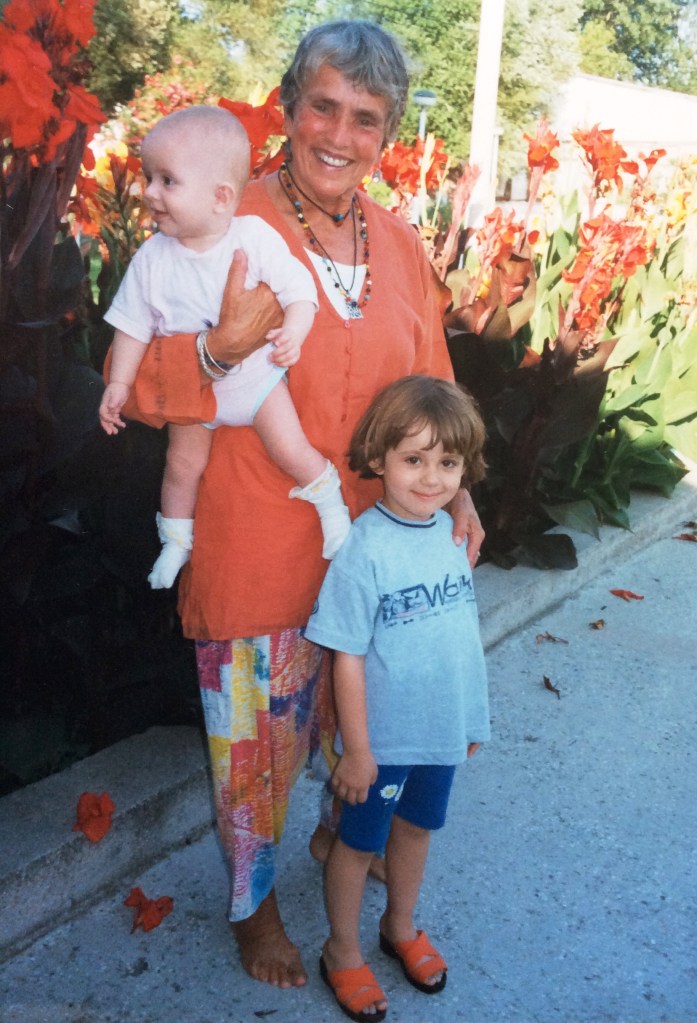
M was born in hospital in Bursa, and Nanny Joyce was here for the occasion, although I think she probably wished she wasn’t, at times! She was pretty horrified (as was I) by the way I was “looked after” at the hospital, and also by the seeming crowds of constant visitors at the hospital and at home afterwards. However, she was delighted with her new grandchild (her seventh) and really helpful to me at home for the short time she was able to stay. B was born in early December a few years later, and I think I took her to England for Christmas, with M, when she was a year old, although Mum came to meet her in the summer of her first year.

1997?

Before the children started school, we would take them to England at Christmas time if we could, then later, the term break at the end of January became our regular UK holiday time. M spent her first Christmas in England, and her third; in her second year we were in Saudi Arabia! Nanny always made a fuss of both the children and they loved going to her house; we stayed with her when they were very small and she was still well, in the nineteen nineties and early 2000s.

Mum made delicious food and ignited or nurtured some foodie loves that still persist – Walkers crisps are a firm favourite that the girls always buy when we go to England, and Nanny Joyce’s avocado cheese toasties were her most popular snack long before Instagram existed. Of course, Christmas food was always extraordinary.

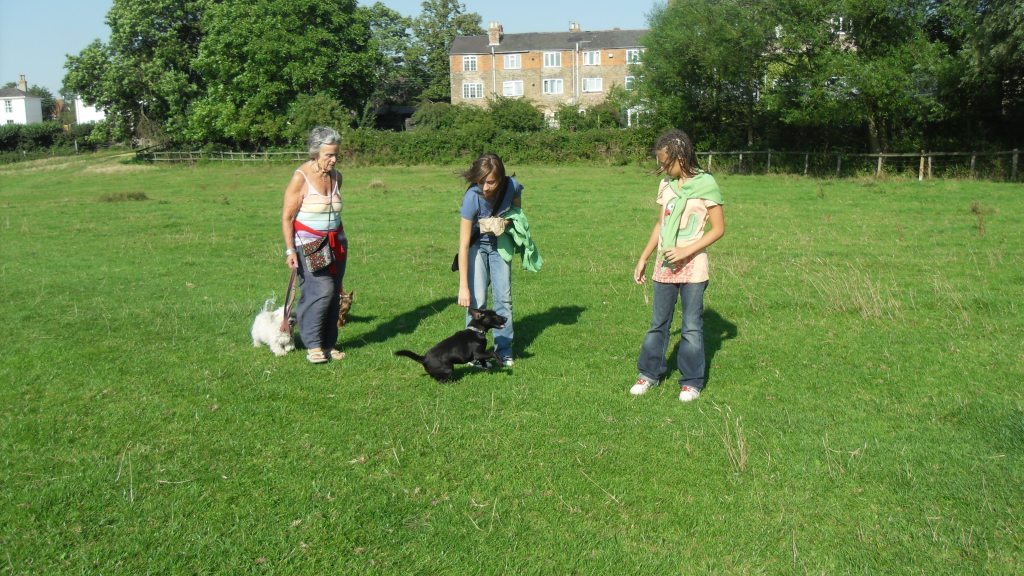
On the water meadows with Nanny & dogs

Her house and garden were something of an Aladdin’s cave for the children. She had two small dogs that both enjoyed attention, and there were always boxes of pencils and paints for drawing. Her own paintings, photographs, and other artwork were all around the house, together with fascinating objects from her travels. The house and her clothes always smelt of Nag Champa, the incense that she burned almost every day. Her style and taste were very eclectic, and reflected vibrantly throughout the house, each room painted in a different colour (or colours) and furnished with throws and cushions, icons and mobiles, so that there was something interesting everywhere you looked.

Nanny’s clothes were striking, too, and she always stood out from the crowd. She loved purple, Indian prints and textiles, and natural fabrics. She valued comfort and hated conformity. She built a wardrobe of sale bargains and second-hand clothes, which she added to occasionally but rarely discarded anything from. She looked after her clothes and wore them for years and years (that’s where I get it from!).

After Dad died, she quickly developed a style of living and being that was really the antithesis of the punctual, clock-watching, perfect housekeeping, routine way she had had to live while she was married. That’s not to say she didn’t love him, but it’s very clear that her natural personality was very much suppressed within marriage, and the artist in her was given free rein when she later lived alone.

When we were children, Mum frequently and regularly said she wanted to learn to paint, but with four young girls, my brother, my Dad, and her mum to look after, it was impossible for her to find the time. She finally had the chance to take some painting lessons when she was widowed, and she revealed and developed a natural talent that she had always known she had. She was particularly fond of using watercolours and pastels, but I think she also learned to use acrylic and even oil paint. Her output was quite prolific and all of us have some of her wonderful paintings; she even sold some at one time.

1999, Summer Camp

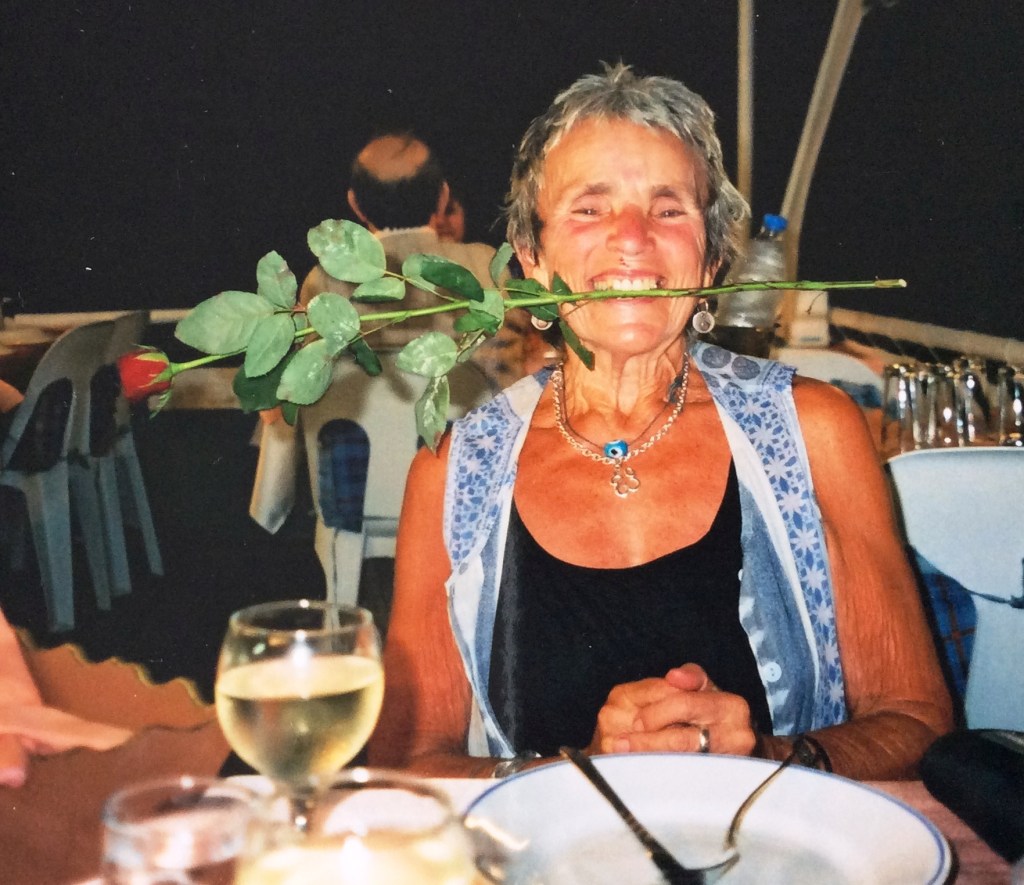
Mum loved coming to visit us in Turkey in the summer. When the children were small, my boss would find her a place to stay in the summer camp where I worked, and later when we had our own house with access to the same stretch of coastline, she continued to try to come every year. She always brought gifts of clothes and toys, and most frequently, art supplies, delighted that the girls were creative and interested in art and design. In her sixties and seventies, she would shock the neighbours by strolling around and sunbathing in a tiny bikini, always totally unashamed of her body and loving the warm sun.

At dinner in Erdek

Wherever Mum went and whatever she did, she was always interested in people and in the culture of the place she was visiting, particularly the cuisine and the arts and crafts. In Bandırma and Erdek, she loved to wander around the markets looking at the heaps of fruit and vegetables, or rummaging through the bargains on clothing stalls. If we spent a day in Istanbul, we went to the spice bazaar or the grand bazaar and wandered. We spent a particularly lovely day once on a ferry along the Bosphorus, accompanied and guided by Orhan, who made sure we paid just pennies to take a local ferry rather than many pounds for a tourist boat!

As this New Year begins and the world seems ever closer to catastrophe and destruction, it would be easy to despair. Whenever there was bad news, Mum would always say, “I don’t know why we can’t all just love each other.” She loved her family, her dogs and all animals, the environment, the water meadows in Sudbury, the countries she visited, hot sunny weather, music, food, painting, and her friends. Her example is not a bad one to try to follow.

Joyce Ann Lambert 1933-2015

Featured

Music & Ballet

The front room of the house was kept for “best”.  It was always hushed and calm, in contrast to the living room and kitchen where 4 or 5 of us were constantly doing something: eating, playing, fighting, watching television, or doing homework.  The front room was always tidy and there were no toys.  There was a large sofa, a little upright piano (bought when I was ill once, as a surprise when I came downstairs) which no-one ever learned to play, and a record player.  This was a little red portable affair, with a lift-up lid and an expanding carrying-handle on the side of the case. 

We had maybe a dozen 45s, or singles, and it was a real treat to be allowed to go into the front room and play records.  The records belonged to mum or to Michael: Nat King Cole When I Fall in Love, Shirley Bassey Hands Across the Sea/As I Love You, Kathy Kirby Let Me Go Lover, Petula Clark Anyone Who Had a Heart, Marvin Gaye Heard it Through the Grapevine, and To Be Loved, the Jackie Wilson song, but I don’t think it was him singing it.  The first records I bought myself were Julie Do Ya Love Me by White Plains, and Me and You and a Dog named Boo by Lobo!  My tastes have changed since then! 

You could stack singles on the central spindle on the turntable and watch them drop and play automatically, one by one, although after there were a few on the stack, the sound often warped and you’d have to start again. I would play them over and over, singing and dancing along. I knew every word and every nuance of those songs, and I still do.

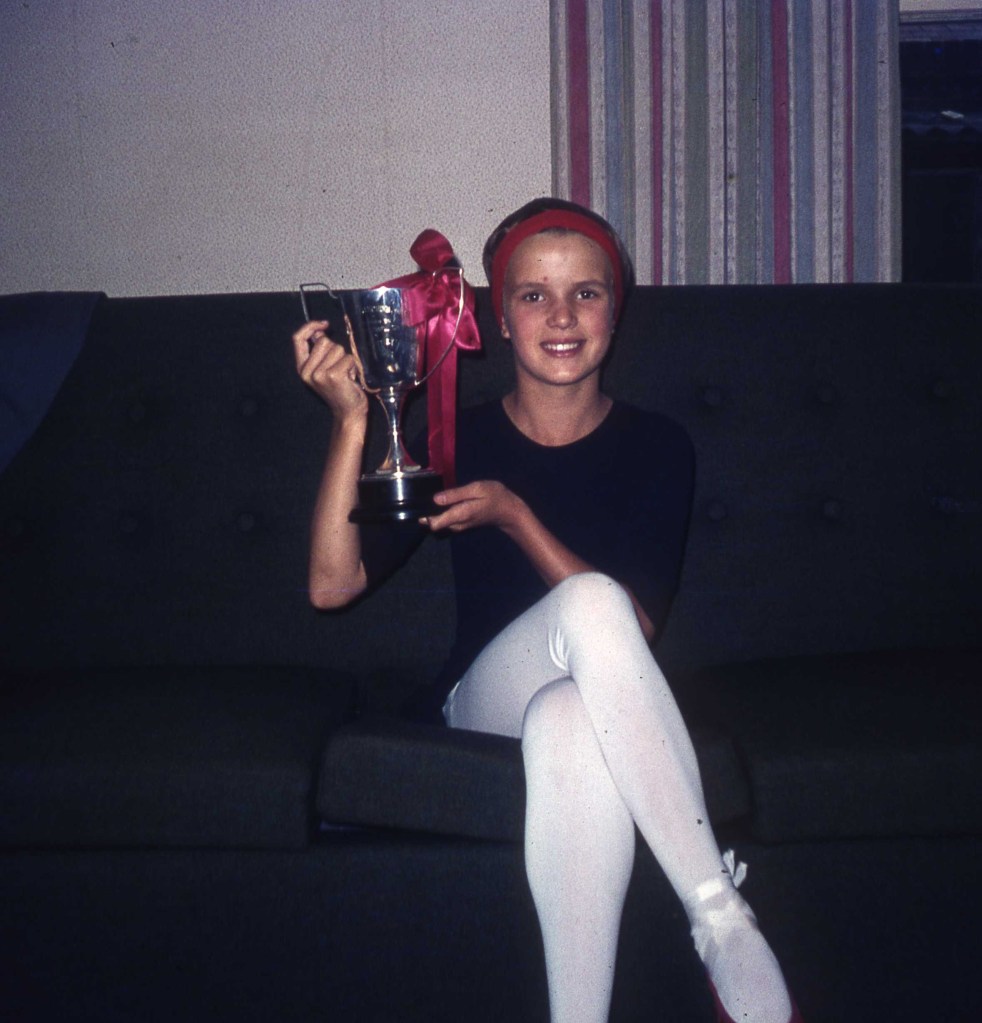
We must have used the front room for family gatherings, but what comes to mind is me posing in there with my trophy from ballet when I was 10, and a couple of years later, sitting quietly in there with Michael when he was recovering after his accident.

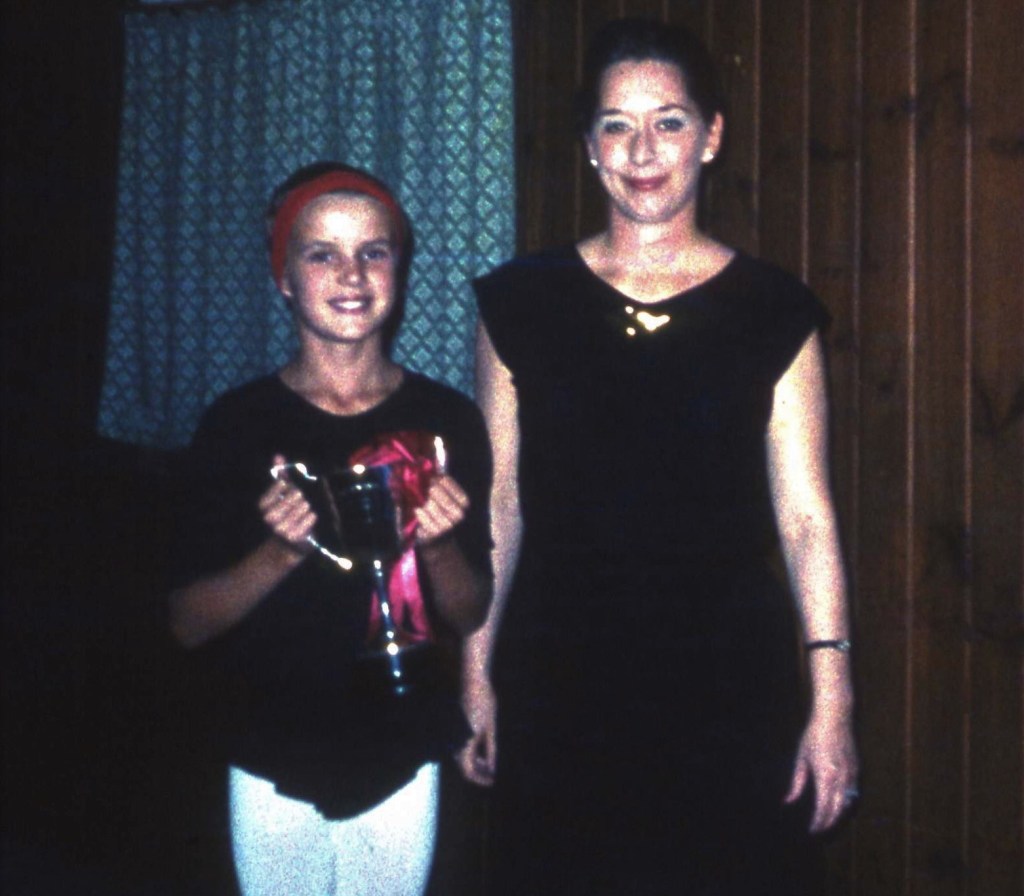
Ballet was the love of my life, from when I was tiny right up until I left for university.  Miss Vine lived in Bildeston and was the owner and sole teacher of the Red Shoes School of Ballet.  She had previously lived in Singapore, and had something of an exotic air about her. She was every inch a dancer, from her perfect hair, always in a neat bun or chignon, to her beautiful feet.  She always wore a skirt, often pleated to allow movement, and soft T-bar dance shoes. Her posture and deportment never faltered.  I adored her and so wanted to impress her, all the time.  She came to Sudbury once a week, on Thursdays, and held classes in a hall near the Prince of Wales pub, opposite the old Victoria Hall, which was where Sudbury Amateur Dramatic Society used to perform before the Quay Theatre was built. 

I worked my way up through the grades; exams were held for all her students at the village hall in Bildeston, or maybe Rattlesden, once a year, and an examiner from RADA would come and watch us.  Once the results came out, all the pupils would go to the prizegiving, again in Bildeston, and each year Miss Vine would award the cup for the best achiever.  That cup was an enormously important trophy in my mind, and in 1971 it was my turn to win it!  I felt I knew, as mum and I got in the car in Sudbury that day, that I was going to get it, and the anticipation was immense.  When my name was announced I was so proud and excited. My name was engraved on the trophy, and I kept it for a year, then it was passed on to the next winner and I was given a small replica to keep, which I still have.

With Miss Vine

It really was a big thing, because I was rewarded with a trip to the Royal Opera House in Covent Garden to watch Romeo and Juliet.  That Prokofiev music, which I already loved, transported me, and I can still see the majesty of the Dance of the Knights scene, looking up at the dancers from the centre of the stalls.  We spent the day in London, probably sightseeing, and when we arrived at the theatre I changed my white jumper for a white frilly blouse, and had all my pin-curls taken out and my hair brushed into curls.  Those were the days when people dressed up to go out.

Each of us was allowed one hobby that required payment for lessons; mine was ballet. I would have liked to learn to play the piano as well, but it wasn’t possible.  By the time I was 11 or 12, I was having free ballet lessons – I would go down to the hall straight from school and sell leotards and shoes, and supervise the changing room for the earlier classes, until it was time for my class, which was always the last one of the day.  In exchange for this help, I didn’t pay for classes for several years.  At one time, Miss Vine suggested I audition for a London ballet school, but fear (of failure? of being away from home?) stopped me from telling my parents about the possibility, and it never happened.

I’m not sorry about that; the life of a professional dancer requires much more passion and commitment than I would have been capable of, but I often wish I’d carried on dancing for pleasure after university.

Featured

Outside in the garden

Opposite the kitchen, across a small concrete yard, were two creosote-black shed doors.  On the right was the coal shed.  The coalman used to come regularly to deliver coal, emptying sacks of it onto the small heap at the back of the shed.  Mum or dad would go out to the shed a fill the coal scuttle using a large shovel, so there was always coal by the fireplace. 

Both mum and dad were meticulous about laying and lighting the fire. After cleaning the cold ash out of the fireplace, they would first take sheets of newspaper, folding and rolling them tightly into spiral cakes which they’d arrange neatly.  Then a small amount of kindling, and a little coal.  They’d strike a match to ignite the newspaper, and add more coal once the fire was burning.  Occasionally, they’d hold a sheet of newspaper over the fireplace, which apparently helped the fire to draw better.

The chimney sweep came to visit perhaps once a year. He would spread a dust sheet in front of the hearth, then insert his round brush into the chimney, adding lengths of pole, one by one, until the brush had gone up two storeys.  We loved to stand outside and watch for the brush to poke out of the chimney pot!

The other shed door was the entrance to dad’s space, his workshop.  Although he didn’t actually do much DIY, he had the tools and equipment to do almost any handiwork, and he was quite obsessively neat and organised.  He was also extremely capable, and a perfectionist, when he did make anything.  There was a heavy workbench for carpentry (it would make a fortune these days as a yuppie kitchen table!), and shelves and drawers all around.  Tools hung from the walls, and glass jars of screws and nails hung under the shelves, all carefully organized in different sizes.  At the back of this space was the indoor area of Sheba’s run.

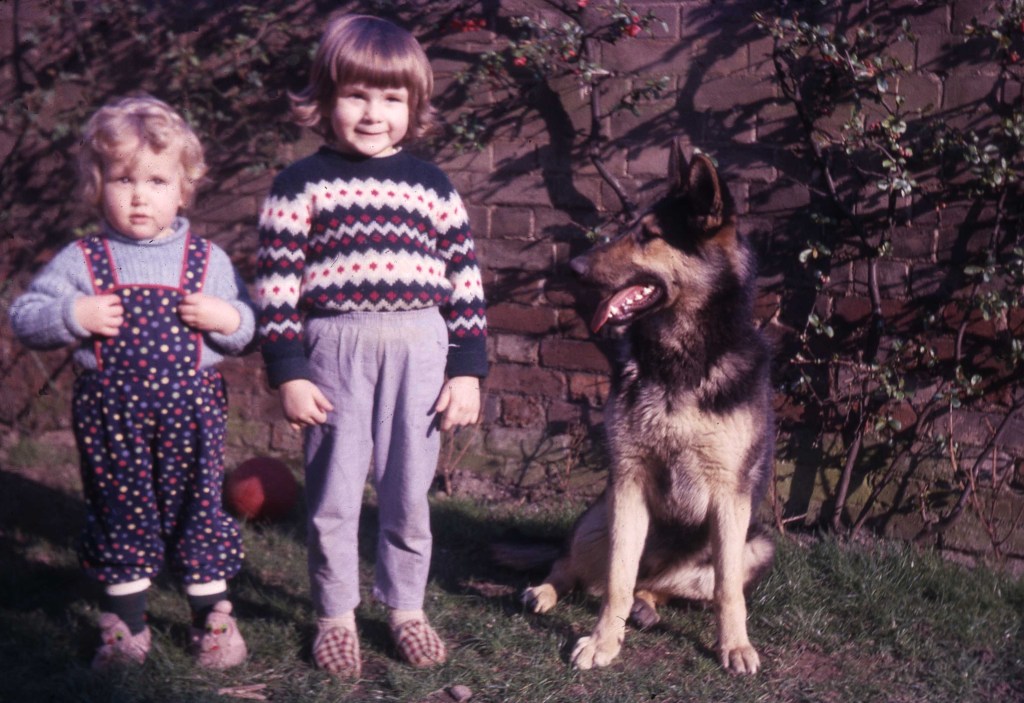
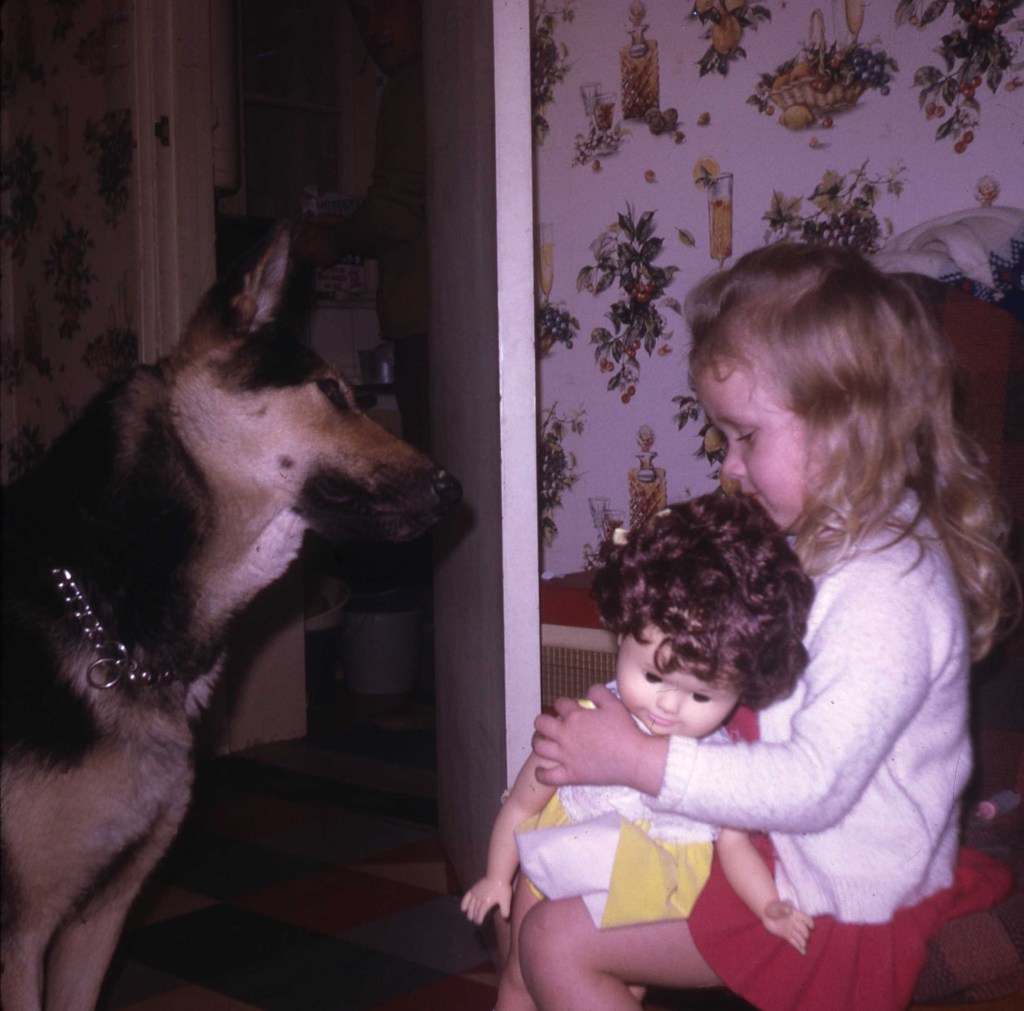
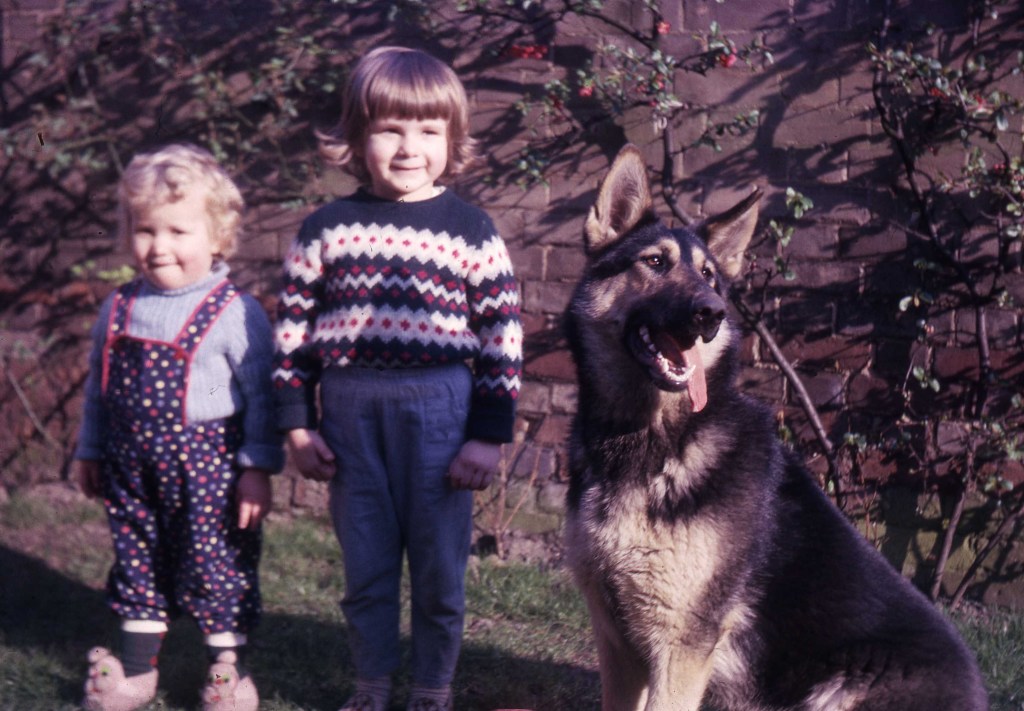
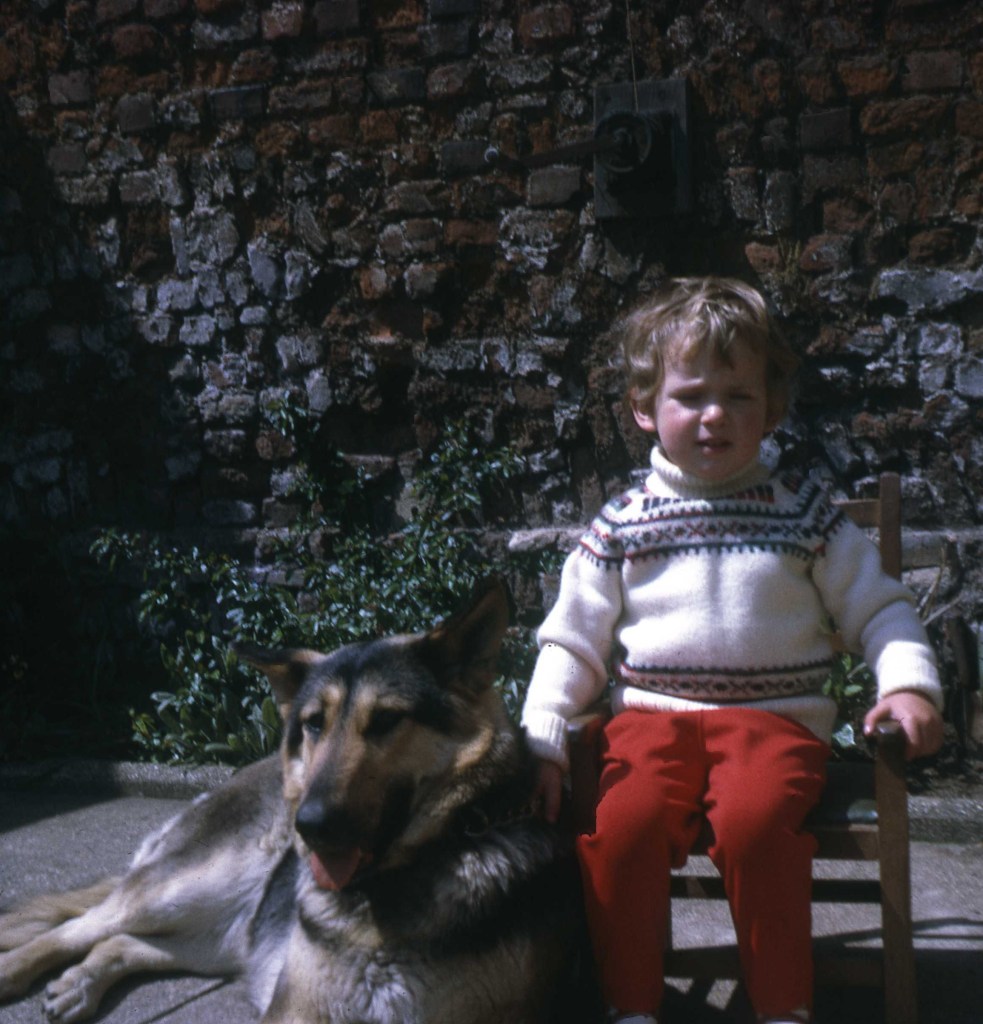
Sheba was a beautiful German Shepherd dog that we got when I was a toddler, probably after Dinah was born.  She was the gentlest and best-behaved dog imaginable, and was wonderful with us children.  She lived mostly outside; her run was spacious and had a roomy outdoor section on the side of the shed, accessible from the garden, as well as the indoor part.  She wasn’t shut in very often, and was frequently out in the garden keeping us company.  She was powerful and protective; once she leapt right over the garden gate (6 foot high?) because she felt threatened.  She had to be put to sleep because she went totally blind and couldn’t really manage; I can still see mum going out with her, walking past the living-room window with Sheba on the lead, and coming back without her, heartbroken and trying not to show it.

The garden was roughly L-shaped, around two sides of the house.  Towards the front of the house, opening out to the road, there was a one-car garage between the garden gate and the pub next door.  I’m sure we had a number of different cars, but the one I can see in the garage was a blue Morris Minor Traveller.  Its distinctive wooden frame at the back, and the retractable indicator arms that sprung out at the sides (put the winker on, dad!) were wonderful.  You could enter the garage from the garden; there was a small door at the side.

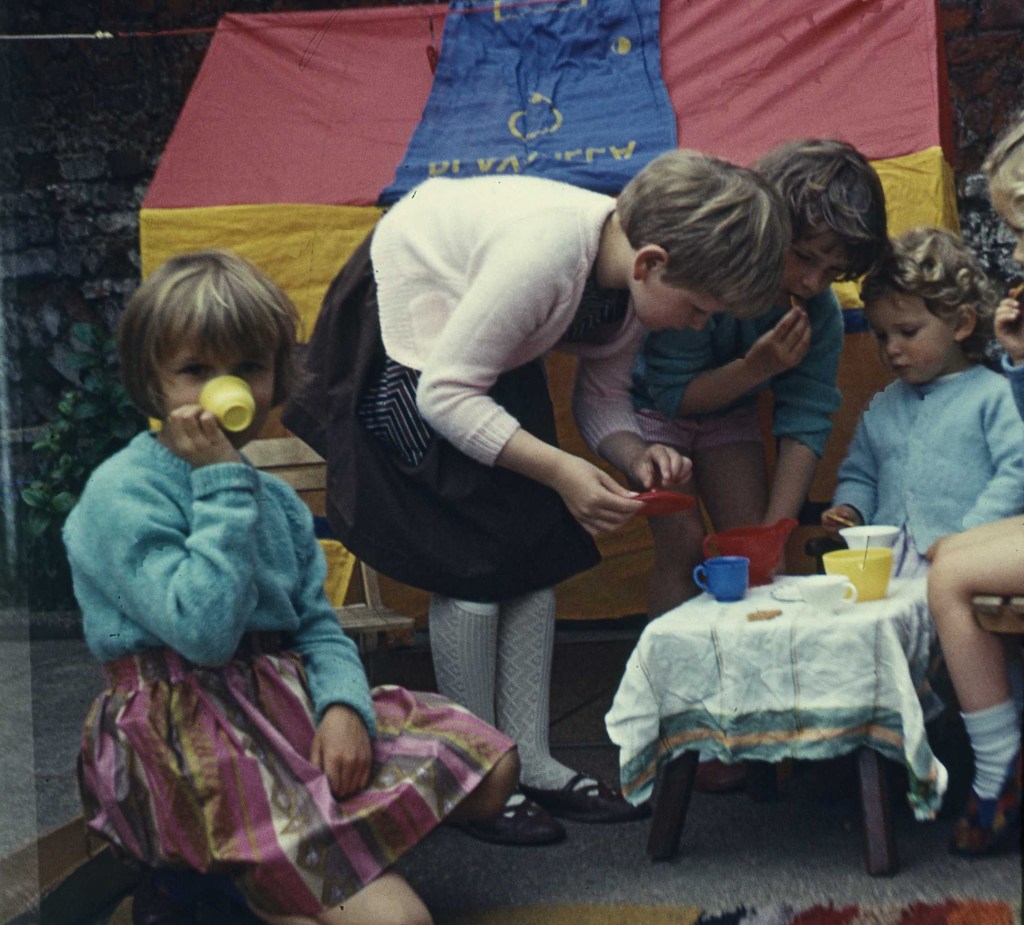
Wendy House

The tiny lawn backed on to the garage. Concrete pathways joined everything together, and we’d ride tricycles or scooters, or push dolly prams around these little roads.  Sometimes, we’d have friends round to play, and mum would erect a little Wendy-house in front of the kitchen.  We had tiny chairs and stools to sit on, and a little tea-set so we could play house!

We weren’t allowed to play in the street, even though it was a cul-de-sac and most of our neighbours’ children were out there.  Perhaps when I was older the rule was relaxed a little; street friends included Jane Monk, Elizabeth Montgomery, Carolyn Ranson, and Peter Death (De’ath). Cherry and Vanessa Harvey lived in Upper East Street, a short walk away. 

Opposite our house, in a detached bungalow on the corner plot, lived Mr and Mrs Poulson.  They were already elderly when I was a child.  They kept a vegetable garden and occasionally I would go there and be given carrots or potatoes. Mum made the most wonderful thick root vegetable soup in the winter which would often be our main meal of the day.

I know mum and dad weren’t too happy about the house being next door to the pub, the Black Horse, and I think more than once pub customers came in through our garden gate looking for the toilet, but I don’t remember any disturbances.  At the bottom of the road, just opposite on East Street, was Sepping’s butcher’s, with green and cream tile outside and slaughtered animals hanging in and over the windows.  Just around the corner on East Street, going towards the town centre, there were a couple of small and very ancient shops.  One of them sold vegetables, among other things, and at least once I was sent there to get carrots in exchange for a thrupenny bit.  I think the same shop had bins of loose biscuits, too. Anything you bought would be weighed and wrapped in a brown paper bag, no plastic anywhere.

Featured

Monday was Wash-day

With four children under 5 years old, there were always nappies – terry-towelling nappies soaking in buckets, being laundered, hanging on the washing line, and being ironed.  How did she keep up with it? Wash day was only once a week, on Mondays, and pretty laborious. Everyone did their laundry on Mondays; it was time-consuming, and there was no need to cook on Mondays because there would be leftovers from Sunday’s roast, so that opened up time to finish the washing.

We had a twin-tub washing machine (we still had the same one when we moved to Priory Road when I was 14!) which was wheeled out from under the counter.  The lid of the washing tub was removed and the tub was filled with water by running a hose from the kitchen sink. Then I think the soap powder was added, and the machine turned on to heat the water. 

When it was steaming, the laundry was dropped in, and another switch started the agitator to swirl the dirty things around. Meanwhile, mum would fill the sink with clean water. After some time, she would turn off the agitator, and transfer each piece of clothing from the machine to the rinsing water, using a pair of long wooden tongs.  Did she spin the soapy clothes first? Or hand wring?

After rinsing, the laundry went into the second tub to spin the water out. Each basket of clean laundry was then carried outside and hung on the washing line to dry.  This was often my job when I was a little older. Our washing line was raised and lowered by turning a handle mounted on the garden wall.  The wall was two storeys high, up to the guttering level on the house, and built from red brick. It was very old and quite blackened and mossy in places, and sagged alarmingly in the middle, so I often felt afraid that the tension of the washing line would pull the wall down into the garden.  It never did.

Lovely picture of Sheba with Dinah, but look at the wall and the washing-line winder!

That washing machine must have been emptied and refilled several times every Monday.  In the winter, drying was finished off on wooden clothes horses in front of the fire.  Mum ironed everything.  The ironing board was made of wood; I think she may have still had the same one when she died! Every so often dad would re-cover it with a new layer of foam and a clean piece from an old sheet, held together with a neat row of tacks on the underside; this was a job that I did a couple of times later on.  Ironed clothes and linens went upstairs into the airing cupboard – shelves built into the cupboard around the boiler which meant that clean clothes were always fresh and warm.

In Newman’s Road, we had a “pantry” under the stairs: a cool dark cupboard in the kitchen, lined with shelves to store cans and jars of food, as well as mixing bowls, a flour bin, and other kitchen essentials.  Once I was asked to get a mixing bowl from there, a large stoneware bowl, and I needed both arms to carry it. Out of the pantry and into the daylight, I saw there was a very large spider in the bowl.  Afraid as I was of spiders, I was much more terrified of dropping and breaking the bowl, so I kept it in my arms until mum noticed my predicament and took it from me!

The kitchen was really crumbling; the wall that backed onto the alley between Newman’s Road and Girling Street was painted in a horrible utilitarian mustard colour. For years that paint was blistered and peeling, and mum was complaining about it.  We always had enough to eat, and clean clothes to wear, but it must have been a struggle as there was rarely any money for anything extra like redecorating. 

The kitchen had a window that looked out into the conservatory and from there onto the garden, and two doors, one from the living room (always open) and one to the hall, known as the “middle door”, and usually closed.  The sink was in front of the window, a big deep white sink that was pitted with age – I always used to think the pits and scars were germs! 

Me going up to bed through the middle door, pantry door on the left.

Probably because it was so cold upstairs, we were all bathed in the sink sometimes, an operation that I think dad was involved in.  We’d be undressed to our pants and lined up on the draining board, legs dangling, then given a wash in the sink and passed to dad, who was waiting with towels for each of us in turn.

When I was tiny there was a gas cooker in the kitchen, with a pilot light inside it, and blue flames towards the back of the oven when it was lit.  Next to that was some kind of counter or cupboard which was used as a work surface.  On the other wall there was a dresser with open shelves.  There was a fluorescent strip light in the middle of the ceiling – Michael lifted me high up one time and my head shattered the fluorescent tube! I wasn’t hurt, and I don’t remember the consequences – worse for him than for me I imagine!

Featured

Another baby sister

Dad went to fight in the Second World War, but can only have been 16 when he joined up.  He was stationed somewhere in northern India, close to Burma perhaps.  He didn’t talk about the war, but he never wanted to travel abroad again.  He had a “war wound”; he’d lost the end of a finger when it was shut in the door of an aircraft! The nail grew out of the end of his damaged finger like a little rounded end of a peanut. He told us about mangoes before we’d ever seen one, how they were so juicy you could only eat them in the bath, and he would count to ten (ek, do, tin, sha, pon, sey, set, art, now, dus) and say “tora peachy” and “kiswasti?”, all of which must be Hindi. 

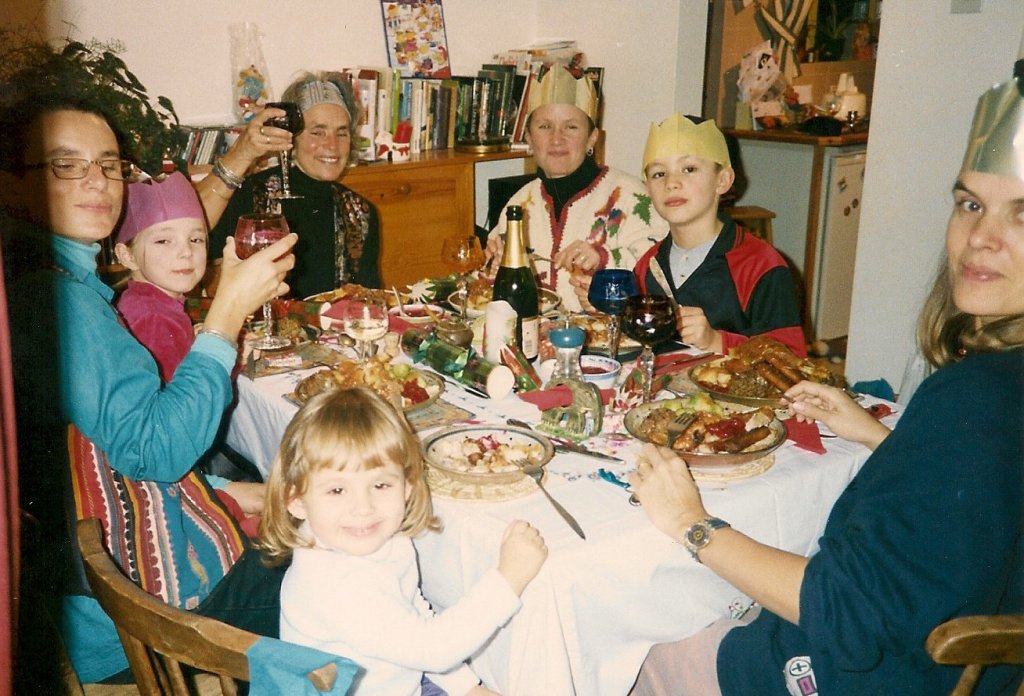
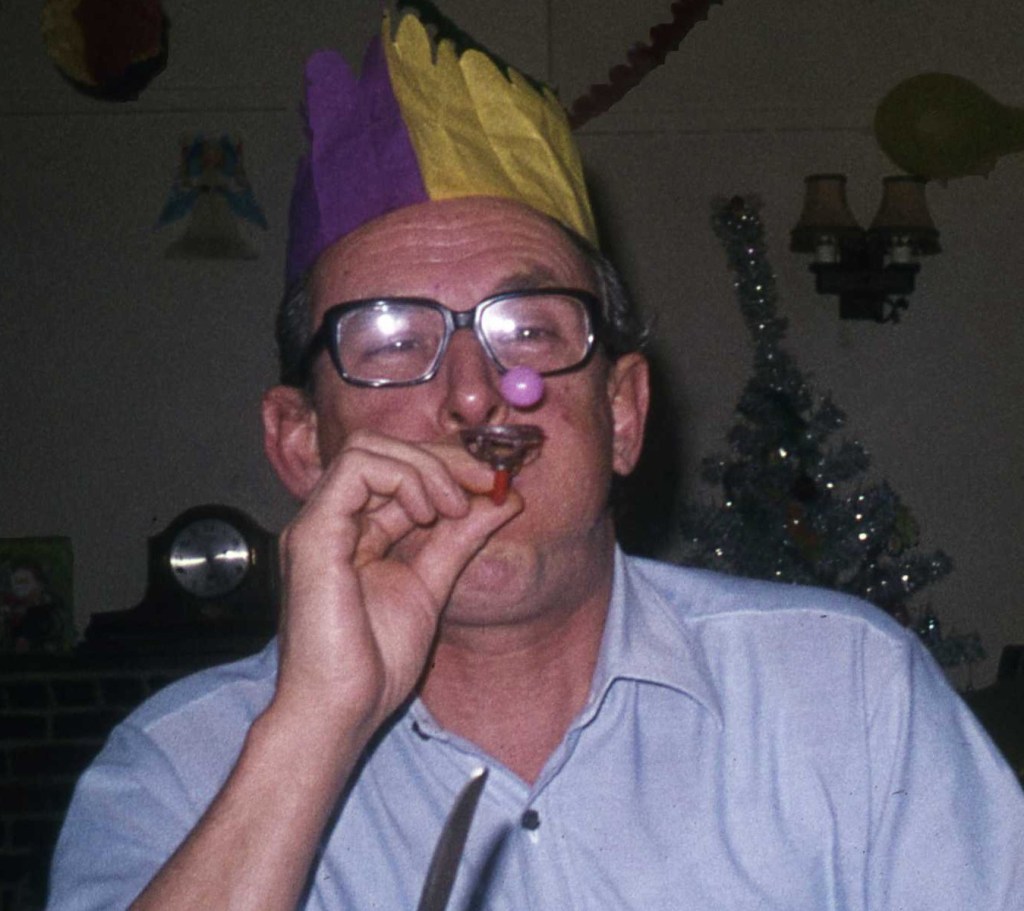
Entertaining at Christmas dinner

He wasn’t a great dad in many ways, because he could be so bad-tempered and unpredictable, but he was very hard-working and, I think, devoted to his family.  We would have times when he’d be laughing and joking, particularly at meal times, and he’d turn in an instant and shout about something that annoyed him. He was very strict: bedtimes, being quiet, helping at home, homework, school work, and general good behaviour and good manners were all essential.  He wouldn’t tolerate answering back, or any kind of dissent.  He smacked us occasionally for bad behaviour, but never violently, and there was a fabled stick in the “conservatory” that we were threatened with but which was never used.

The “conservatory” was really just a rather ramshackle brick and glass lean-to on the back of the house that you had to go through to get to the garden and to the outside loo!  It got very hot in summer and if mum ever had time she would coat herself in olive oil (then only available in small bottles from the chemist’s), hitch up her skirt, and sit with legs splayed and head tilted back to catch the sun, on a folding chair in the doorway of the conservatory, which could be a real suntrap.

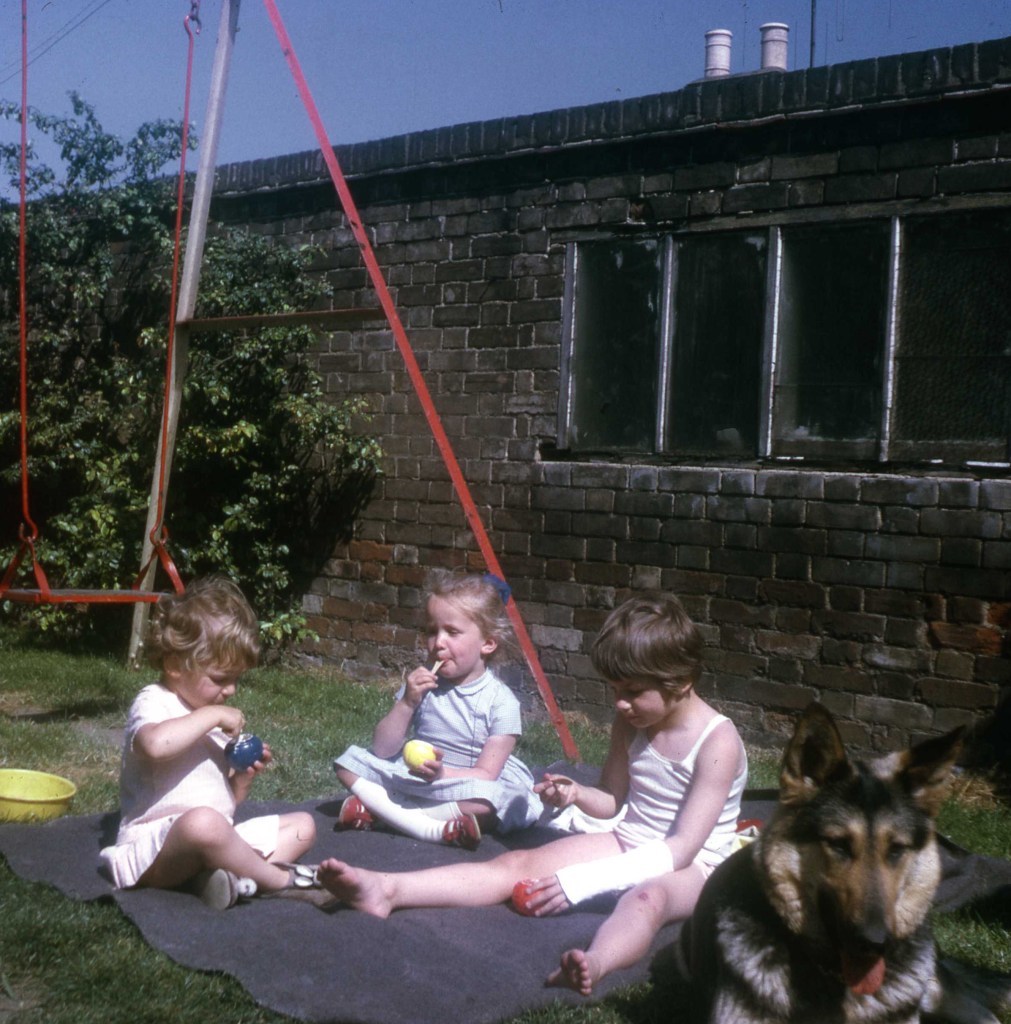
Treats on the lawn with Sheba

The garden was mostly concrete but we made good use of it.  There was a tiny lawn where dad erected a swing, painted red, and with “bottoms up” scratched into the paint on the underside of the seat.  There was a japonica which grew on a trellis against the wall of the pub, and a honeysuckle that was quite wild and overgrown at times.  There was lilac and a few roses, too.  At one stage dad became interested in dahlias and he had quite a few different varieties planted between Sheba’s run and the sand pit.  He built the sandpit for us to play in; I watched him from the bedroom window.

The windows throughout the house were old-fashioned sash windows; two sections that could slide up or down, held by a sash in the casement.  Single-glazed, and with two large panes in each of the upper and lower sections, they were quite heavy but relatively easy to move.  Upstairs in the house, there was no heating at all, and on winter mornings Jack Frost would have visited, leaving thick icy swirls of frost inside the glass so that we couldn’t see outside.  A penny pressed into the ice for a minute or two would clear a peephole, which was particularly exciting if it had snowed outside, and we’d all be jostling for a peek.

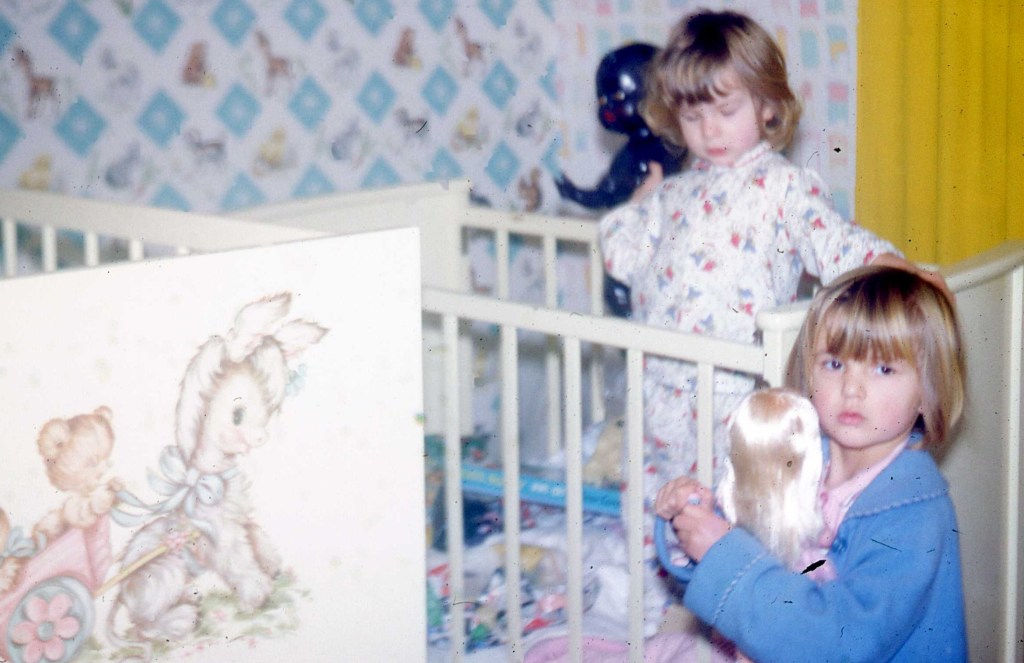
A roomful of cots

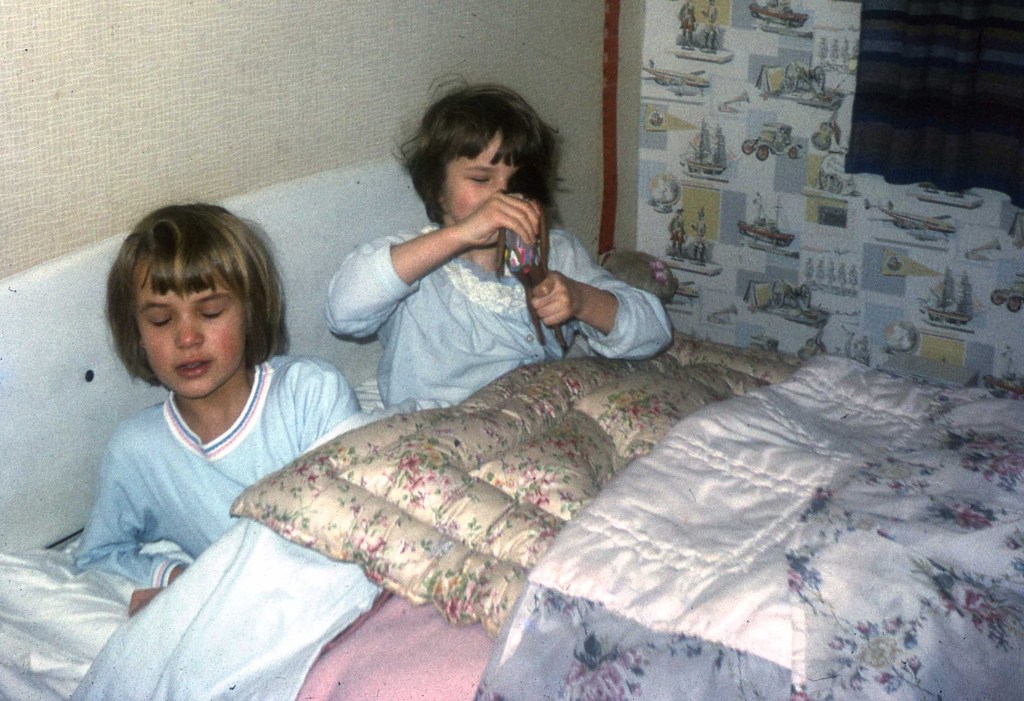
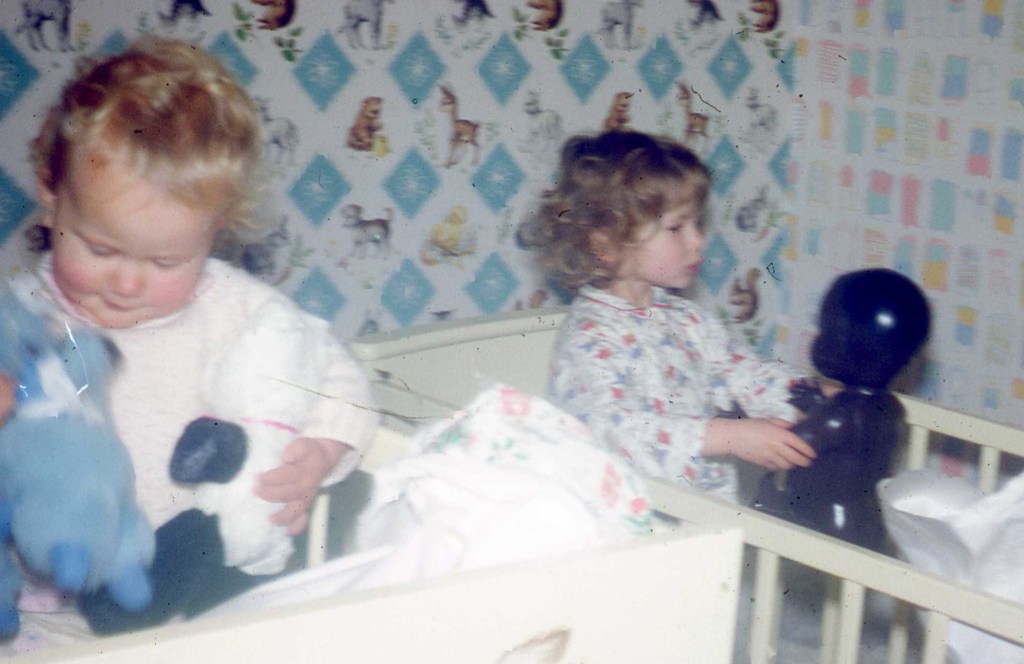
All four of us shared a room when we were little. At first, there was an assortment of cots; I have an image of an uncle (Chicker?) putting me to bed one day and me proudly telling him which cot was mine.  There were perhaps only two or three of us then.  Later, we had two small double beds in the room, and we’d sleep two by two, me with Jayne, and Suze and Dinah together.  Duvets, or continental quilts, hadn’t yet reached England, and our beds would be heavy with blankets tucked in over the sheet, and a feather eiderdown on top, then a bedspread on top of that.  The bedrooms must have been freezing but I was never cold.

Piled high with blankets & eiderdown

The morning Dinah was born, Dad was in our doorway, waking us very early. That was unusual; Mum always woke us up.  We all got up and followed him into their bedroom, very quietly, and there was Dinah, tiny, well wrapped up and lying on her back in a fold-out canvas crib. I feel I remember her face very clearly, with garnet-red lips and wispy dark hair.  I don’t really remember mum that morning, but I think the midwife was still there. I suppose Dad took a day off to look after us, and later in the day he cooked us his perfect and very memorable potato chips, which were an enormous treat.  We all must have been at home, as I was only 4 years and 5 months old, so none of us would have started school, and the very next day I’m sure mum was up and about and back into her usual routine, which must have been punishing with four children under 5 years old.

Featured

More about Harold

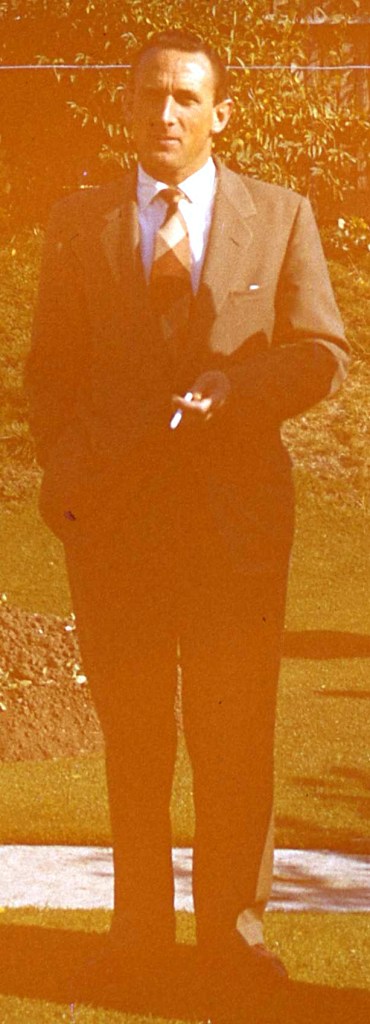
Harold Lambert – Dad

Dad told me once that he never bought anything he couldn’t afford, so he wouldn’t take out HP (a hire-purchase agreement that allowed you to pay in instalments), but instead saved up first for what he wanted then paid in cash.  They did have a mortgage on the house, at 1A Newmans Road, and I used to go to the Halifax with the mortgage book to pay the instalments, which at one time were £11 per month!

As we got older, the teak dining table was the place where we did our homework, played board games, or covered with newspaper to make things we’d seen on Blue Peter. At Christmas and for birthday parties and other family celebrations, the table would be opened up and its extending leaf unfolded and set in the centre, making enough room for eight, ten or even twelve to sit round.  Mum and dad rarely had friends round to the house, but big family meals were a little more frequent, with one or more of dad’s brothers or sisters coming to eat and spend an evening, together with their families. 

Stephanie, Gary, Mum (she wouldn’t thank me)
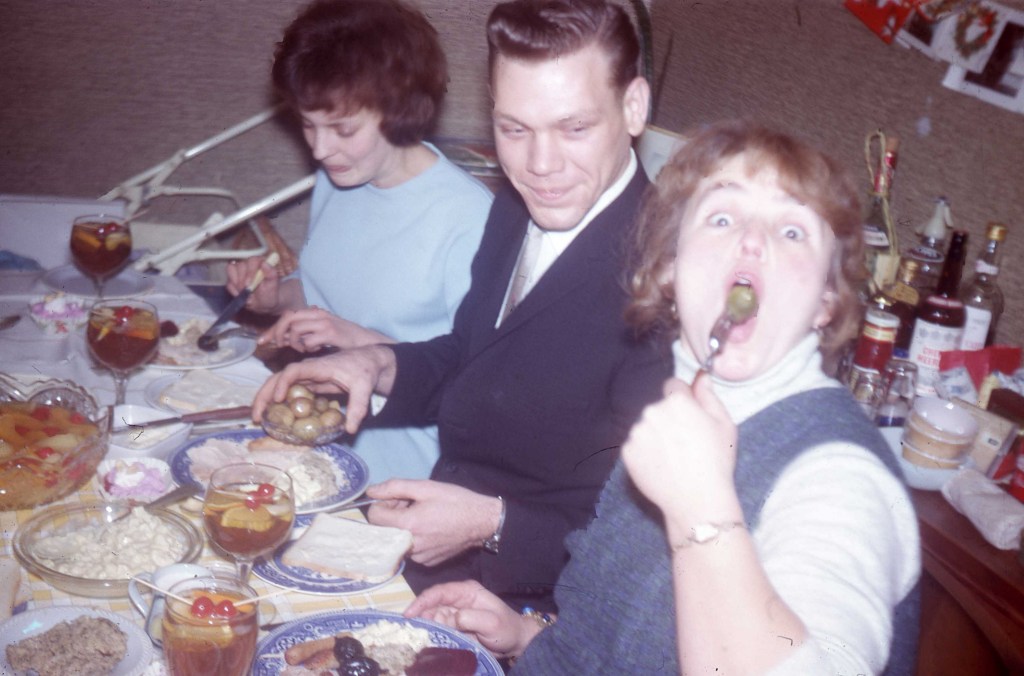
Must be Boxing Day – Pimm’s, trifle, cold meats & gherkins!

We always had fun with Uncle Chicker (George), who knew how to entertain us and had a small repertoire of nursery rhymes and songs that he doctored to make us giggle and squeal. (Baa baa black sheep/have you any wool?/Yes sir, yes sir, three bags full/One for the master, one for the dame/And one for the little boy who hasn’t got a bum!). I think his wife was Pearl, and they lived somewhere on the coast, maybe Felixstowe.

Uncle Bob at far left, then auntie Blanche (?)
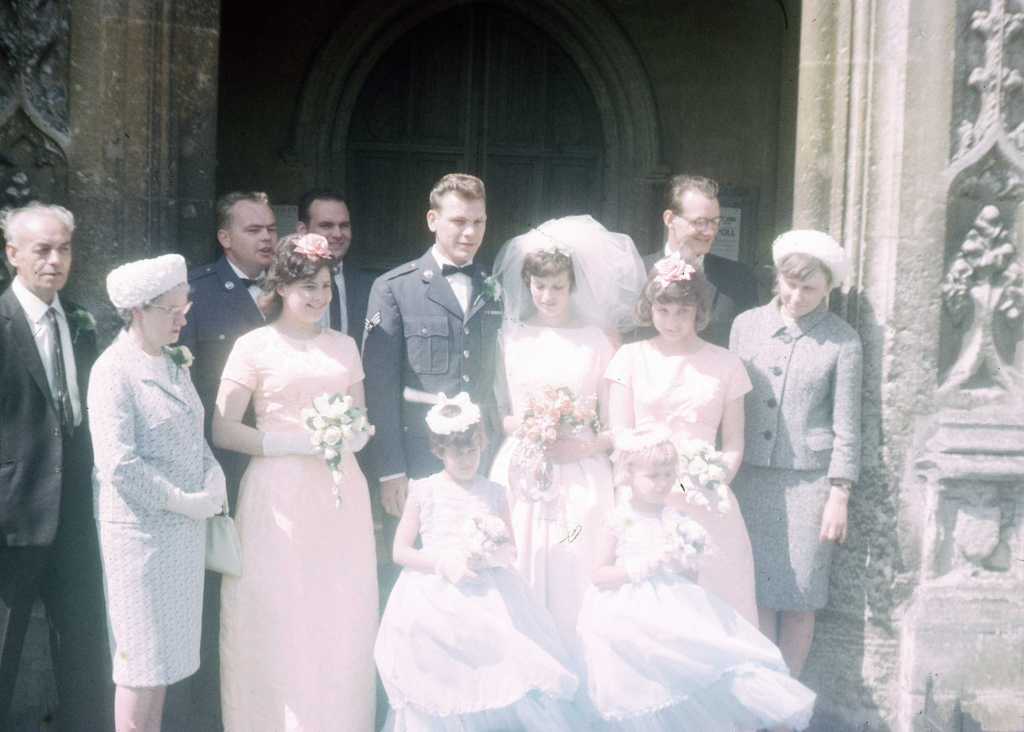
Gary & Stephanie’s wedding at Lavenham Church

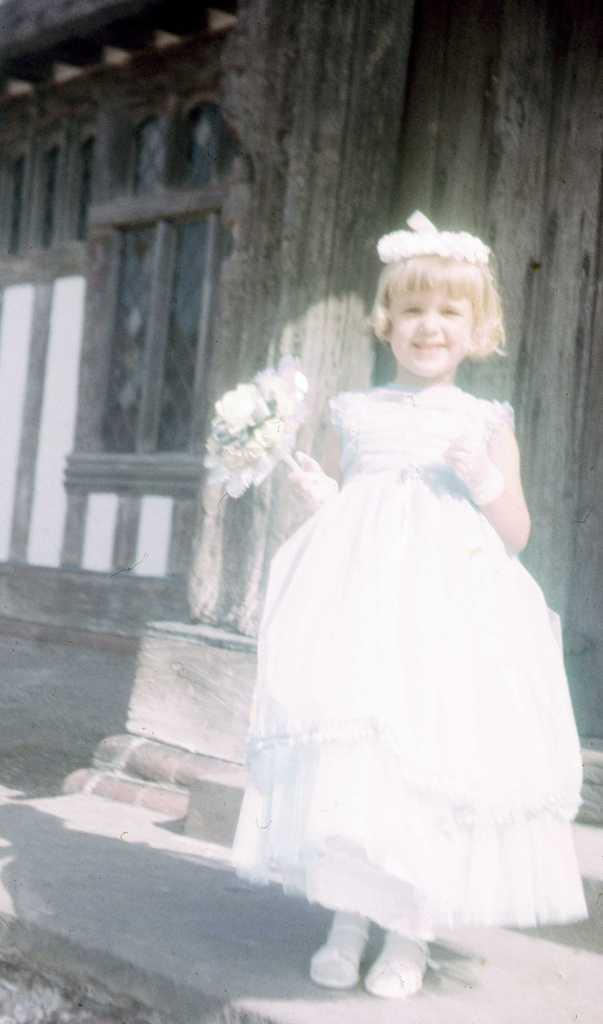
Uncle Bob was Stephanie’s dad.  When I was 4 or 5 years old, she married her American sweetheart, Gary, in Lavenham church, and I was one of the bridesmaids.  They settled in America and had two children, Julie and Shelley.  On my last trip with mum, in 1992, we went to stay with them in Washington State. Julie was newly married then, and Shelley was their “black sheep”, living her own American Dream in Seattle. We loved Shelley, and stayed with her in Seattle for a couple of days; later, in my first year in Turkey, she and her friend spent a day or two with us in Bandırma and on our holiday in Adana.  Stephanie died a few years ago, and I think she spent the last years of her life in a care home because she had dementia.  She had suffered with debilitating migraine headaches all her life.

Me, Lavenham Guildhall

Bob came to visit once, at Newmans Road, following a trip to the States, and I think he and dad fell out after that because Bob only brought us very small gifts, maybe even freebies, from his trip, and dad felt hurt and insulted, I suppose.  (Not for the first time – I think we were estranged from mum’s father for a similar reason.)

Two of dad’s sisters, Alice and Olive, came to visit fairly regularly (although not often) when we were children.  I don’t remember Olive well, although I stayed with her in Sheffield for some reason when I was small.  All I remember of that visit is a very neat little house, and soaked prunes for breakfast and dessert!  Alice is more clearly defined in my memory.  She was a very speedy and prolific knitter; she always had something on her needles.  She could talk for England, chatting tirelessly for hours on end, with her needles clacking at the same time.

Another sister, Kit, lived in Lavenham, and another, Phyllis, probably lived nearer to George.  Two more sisters, Blanche and Ethel, were probably in Lavenham too. There was another brother, Edward, who died in a motorcycle accident in 1930, aged 22, and another, Alfred, who only lived a year. Some sources show that Alfred had a twin, Lily, who also died.

I vaguely remember dad’s dad, my grandfather, although I think he died in 1964, so I’d have only been about 4 years old. He also lived in Lavenham, in a house on the market place where you had to go down a long corridor of a hallway to get from the front door to the living room. He was born in 1881, the same year as Atatürk! I know little of his life; he had a big family, 11 children (of whom 9 lived, I believe), and dad was the youngest of them, born on 5th July, 1923.  By the time dad was born, he was already an uncle; one of his sisters had already had her first child.  The whole family lived in a house in Prentice Street in Lavenham (number 11 perhaps?), which at the time (we were told) had just two bedrooms, one for the parents, and one for all the children! 

Featured

Early days

In one of my earliest memories, I’m standing in the living room, carefully placing freshly washed and dried cutlery into the top drawer of the sideboard. The sideboard is teak, and I understand that it was expensive and must be treated with care, as should the dining table and chairs that go with it. All are reassuringly solid, a glowing reddish-brown colour and (with hindsight I can see) very well made.

The sideboard had four drawers (or perhaps three) in the middle; the top two were quite shallow and the bottom ones were deeper.  Cutlery was in the top drawer, and another drawer contained table cloths and place mats. On either side of the central drawers was a cupboard door. One side was full of drink, bottles of alcohol arranged, no doubt, with those most-used nearest the front, within easy reach.  The other side contained an array of glasses, some of which were quite old and beautiful.  Both cupboards smelt of alcohol and wood, a smell that wafted out each time a door was opened. The cupboard doors opened quite easily, and closed with a satisfying click.

I must have been about four years old.  Mum and dad were in the kitchen, and I could see them through the open door between the two rooms, dad at the sink washing up, and mum with a tea towel in her hand, drying.  I was putting away, trying to help.  It must have been after Sunday lunch, as dad didn’t help in the kitchen at any other time.

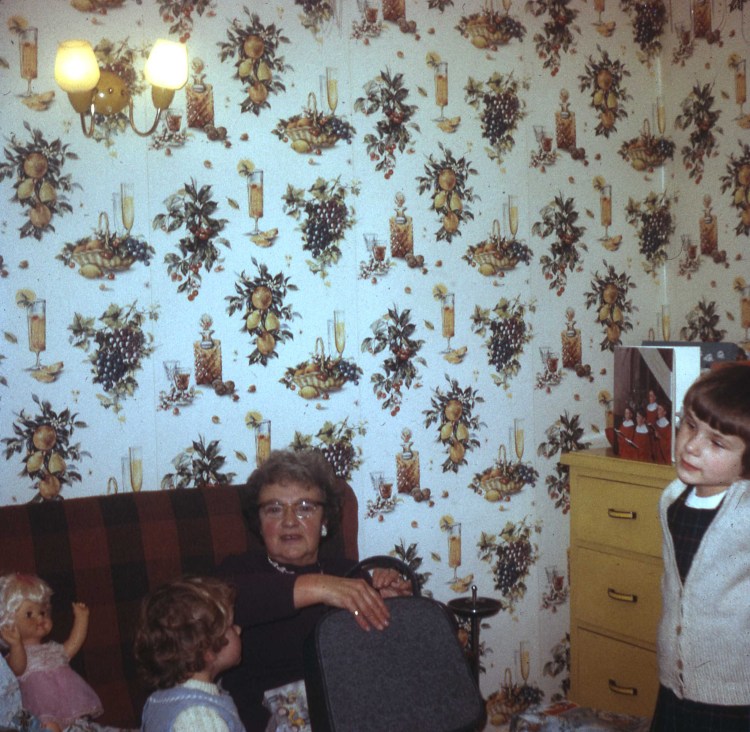
That living room was, I suppose, a fairly typical room of its time.  Sparsely furnished, but what we had was good quality, built to last.  There was a television in the corner between the fireplace and the window.  On the other side of the fireplace was a chest of drawers painted bright yellow.  Next to that was a little two-seat settee, upholstered in a dark red and with wooden arms.  That was a later arrival, new when I was around five years old.  All this was against a background of busy patterned wallpaper with grapes and decanters.

60s wallpaper

The fireplace had a metal guard in front of it and every morning in winter there would be a fire going long before we children were downstairs.  Later I learned that mum got up at 5 every morning in order to get everything done. By the time we got up, she would have laid and lit a fire, vacuumed (we always said “hoovered”), and got our clothes ready – 4 sets of clothes all ironed and laid neatly over the backs of two chairs which were turned towards the fire so that they weren’t freezing cold when we came down to get dressed.

There would be a warm drink for each of us, in plastic cups set on the brick fireplace surround.  We ate breakfast: ReadyBrek in winter, Cornflakes, Shredded Wheat, or Rice Krispies in warmer weather.  We children had our evening meal at around five o’clock, and there was a small rotation of menus, so limited that even now I associate particular meals with TV programmes. Oxtail soup was Scooby-Doo, while fish fingers and chips was Crackerjack (It’s Friday, it’s five to five, and it’s….Crackerjack!).  With only two channels on TV (I don’t think there was even BBC2 when I was tiny), and children’s programming limited to a couple of hours each afternoon, this part of our day became utterly predictable.  For family meals, I’m sure we weren’t allowed to have the television on, but at tea time the four of us would sit around the table in such a way that we could all see the TV.  Even earlier than this, I watched Bill and Ben, and Andy Pandy, on Watch with Mother in the early afternoon, and still recall the words of the Andy Pandy theme music!

Andy Pandy theme tune

Christmas

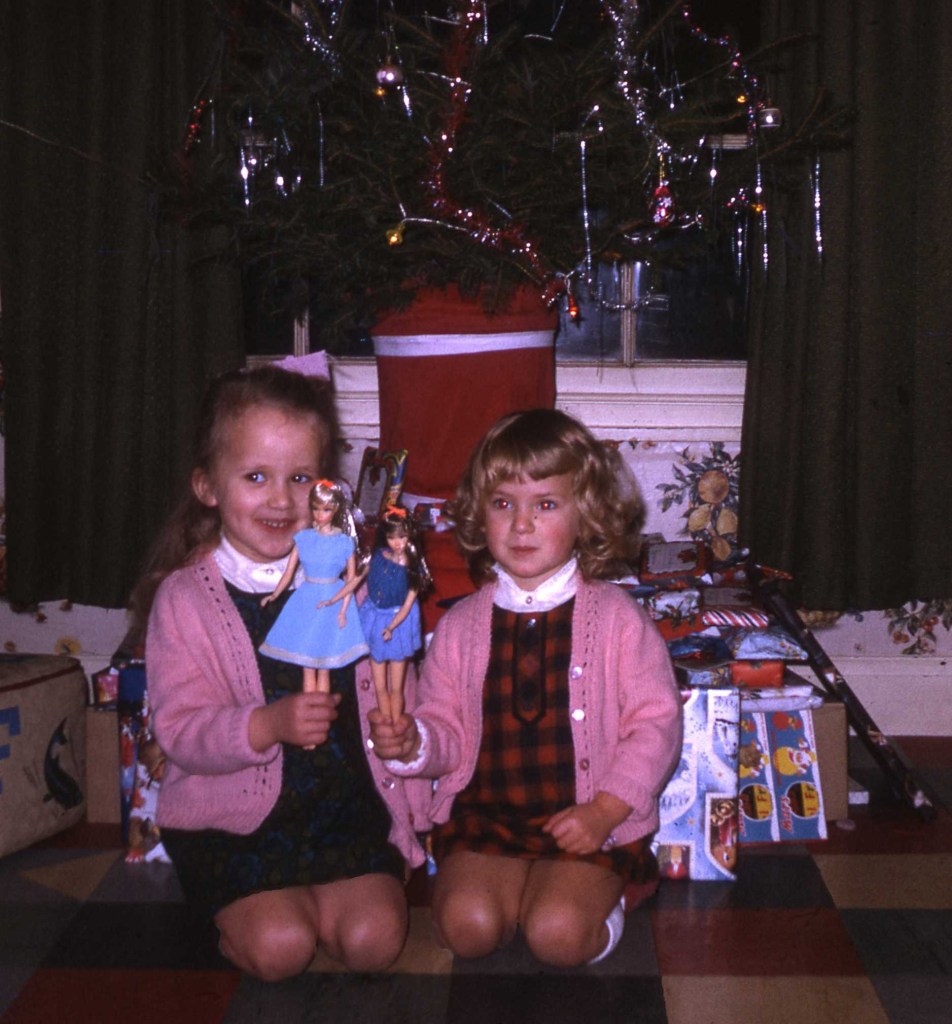
Christmas Day around 1967

Christmas was nothing like the commercial spend-fest that it is now, but it was our biggest holiday of the year, and we always looked forward to it enormously.  Mum and Dad went to great lengths to make sure Christmas was very special, even when there was clearly little money to spare.

We always had a real tree which stood on a box or table covered with crepe paper, and was surrounded by gifts which grew to huge heaps of presents by the time Christmas Day came.  The CAV Christmas party was a highlight of advent – what seemed like hundreds of children sitting down to tea at long tables, with games and music, and a present from Santa for every single one of us!  They had parties on different weekends for different age groups, so we didn’t usually all go together, but we’d see school friends there as CAV was certainly among the biggest, if not the biggest, employer in town.

Once schools broke up for the holidays our excitement mounted every day.  There was an advent calendar (just one, I believe) to help with the countdown to Christmas, and part of the anticipation was for new clothes and toys, because we didn’t have a lot of either.  On Christmas Eve we’d have mince pies and sausage rolls, and before we went to bed, we’d leave a plate with mince pies and a glass of sherry ready for Father Christmas when he came down the chimney.

When Christmas Day arrived, we would all be awake very early – in the middle of the night, in fact!  Mum and Dad had probably only just gone to bed when we woke up, having played Santa and delivered our sacks of presents – a pillowcase full of presents at the end of each of our beds.

Christmas Day, probably 1964

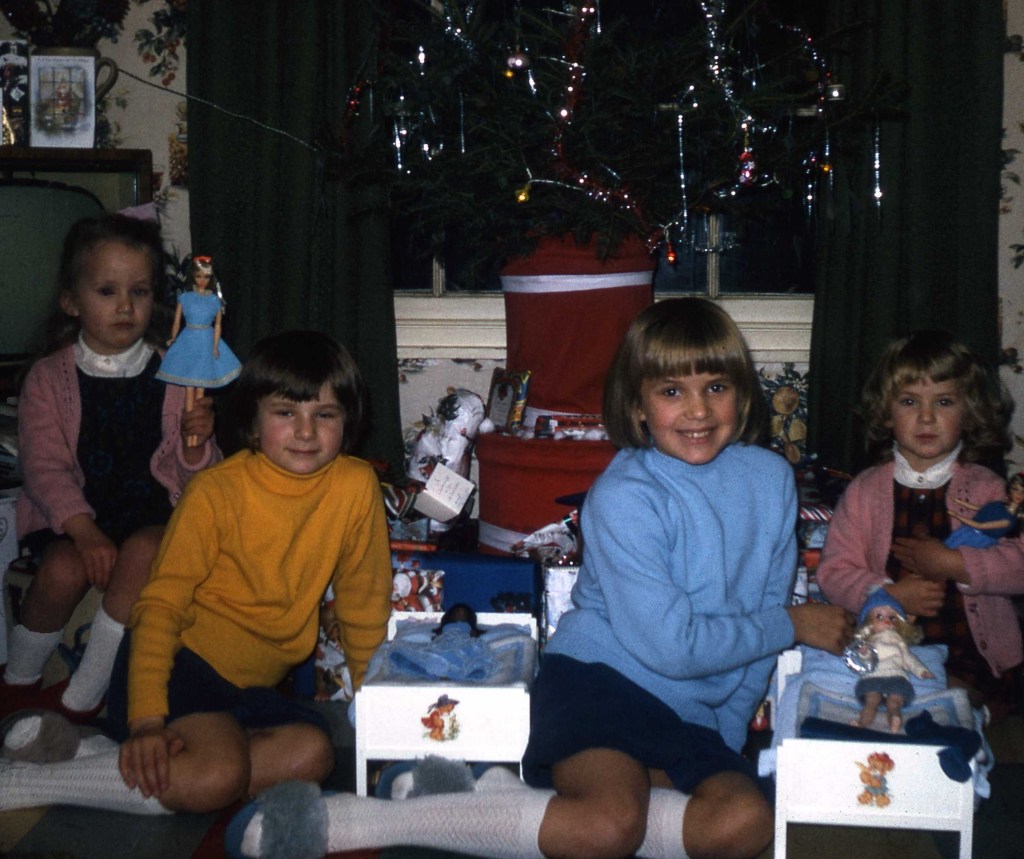
We would have written our letters to Father Christmas, assuring him we’d been good and asking for the things we wanted to find in our “stockings” (pillowcases). One year, we wanted a Cindy bedroom set, and Mum and Dad had a friend (Danny Rawlinson’s dad) make little dolly beds for us – presumably the real thing would have been outside their budget, but the hand-made ones were better anyway.  Another present I always remember was the beautiful black doll Jayne got one year; it must have been a really unusual thing in the sixties, especially in a small rural town.

1967 or 68

“Has he been?”  “Yes!  He’s been!  He’s been!”  Excited squeals and shrieks and we would all be wide awake in that freezing bedroom, hurriedly emptying our sacks of gifts, showing one another and exclaiming over everything.  Mum, Dad, or both would usually come in to watch and enjoy our happiness before we’d finished, and Christmas Day would have started, as there was no chance we’d go back to sleep!

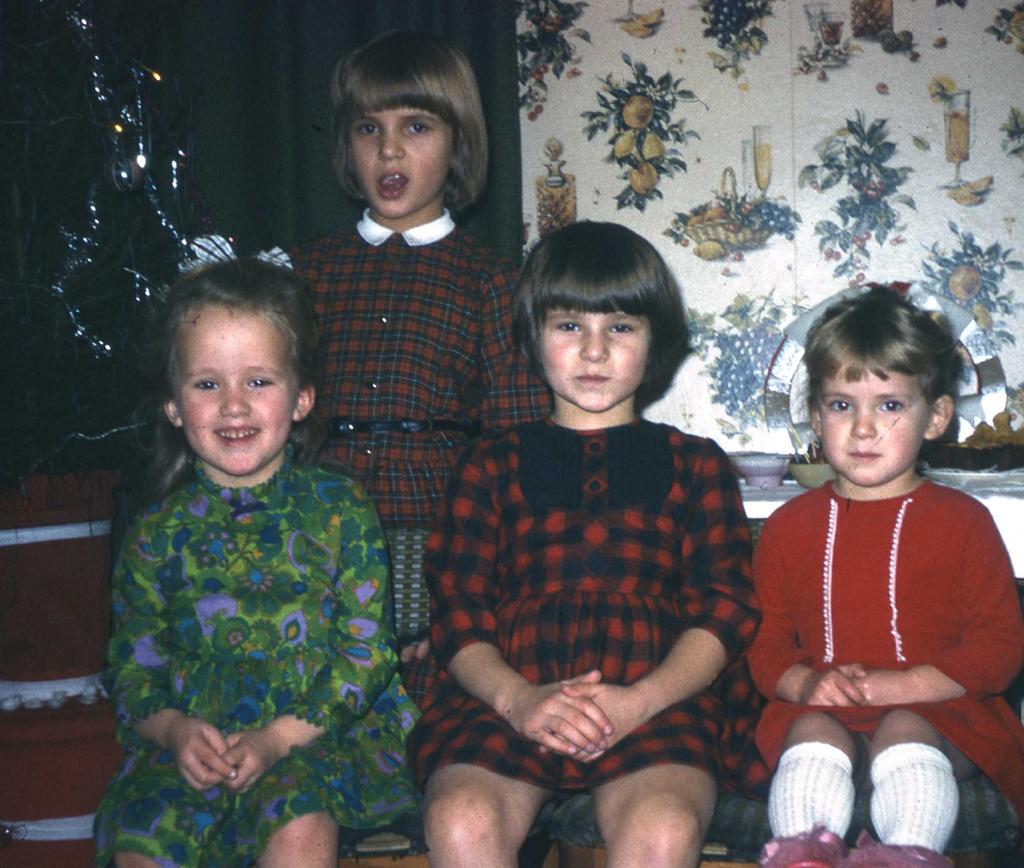
Often Suze’s godparents, Thelma and Ray, would have sent new dresses for all four of us to wear at Christmas, and we’d all be dressed up for Christmas Day.

“Thelma” dresses

Food was another huge part of Christmas and some of my strongest memories revolve around those smells and flavours.  Like every other household in the sixties, our Christmas meal was very traditional: a huge roast turkey dinner with all the trimmings.  There was always doubt whether the turkey would fit in the oven, or whether everything would be cooked and hot at the same time.  We loved cranberry sauce (not bread sauce), roast potatoes, Brussels sprouts, parsnips & carrots, and cream with the Christmas pudding (not brandy butter).  On Boxing Day we’d have a honey roast ham and cold turkey, with salads, pickles, and Pimm’s for the grown-ups (cream soda for us), usually followed by a huge trifle.

Dad would be asleep in an armchair after Christmas dinner, with his glasses slipping across his face à la Eric Morecambe. We’d watch a film on television, play board games at the table, or play with our new toys.  There must have been disagreements and squabbles; there must have been cooking disasters or bad behaviour, but all my memories of Christmas are one hundred per cent rose-tinted, and I’m not sorry about that at all.

Merry Christmas, everyone.

Design a site like this with WordPress.com
Get started