Opposite the kitchen, across a small concrete yard, were two creosote-black shed doors. On the right was the coal shed. The coalman used to come regularly to deliver coal, emptying sacks of it onto the small heap at the back of the shed. Mum or dad would go out to the shed a fill the coal scuttle using a large shovel, so there was always coal by the fireplace.
Both mum and dad were meticulous about laying and lighting the fire. After cleaning the cold ash out of the fireplace, they would first take sheets of newspaper, folding and rolling them tightly into spiral cakes which they’d arrange neatly. Then a small amount of kindling, and a little coal. They’d strike a match to ignite the newspaper, and add more coal once the fire was burning. Occasionally, they’d hold a sheet of newspaper over the fireplace, which apparently helped the fire to draw better.
The chimney sweep came to visit perhaps once a year. He would spread a dust sheet in front of the hearth, then insert his round brush into the chimney, adding lengths of pole, one by one, until the brush had gone up two storeys. We loved to stand outside and watch for the brush to poke out of the chimney pot!
The other shed door was the entrance to dad’s space, his workshop. Although he didn’t actually do much DIY, he had the tools and equipment to do almost any handiwork, and he was quite obsessively neat and organised. He was also extremely capable, and a perfectionist, when he did make anything. There was a heavy workbench for carpentry (it would make a fortune these days as a yuppie kitchen table!), and shelves and drawers all around. Tools hung from the walls, and glass jars of screws and nails hung under the shelves, all carefully organized in different sizes. At the back of this space was the indoor area of Sheba’s run.
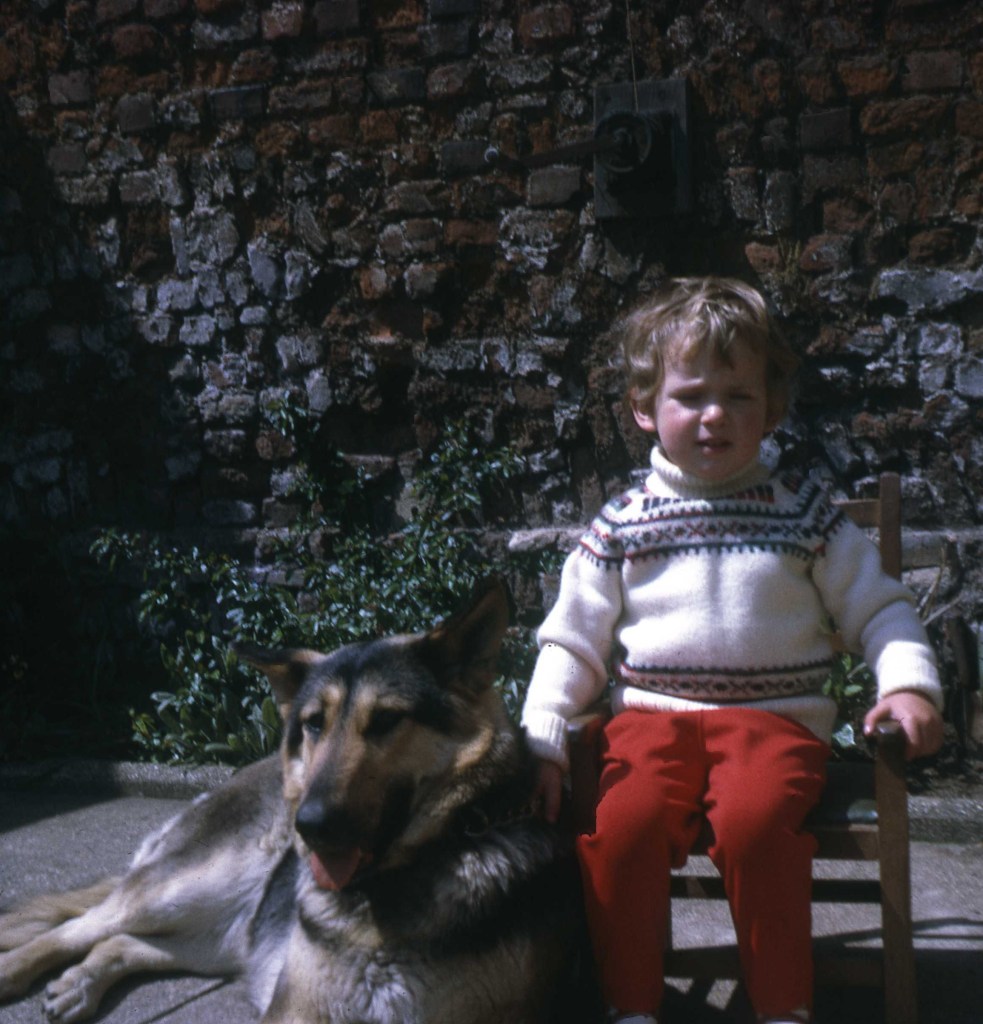
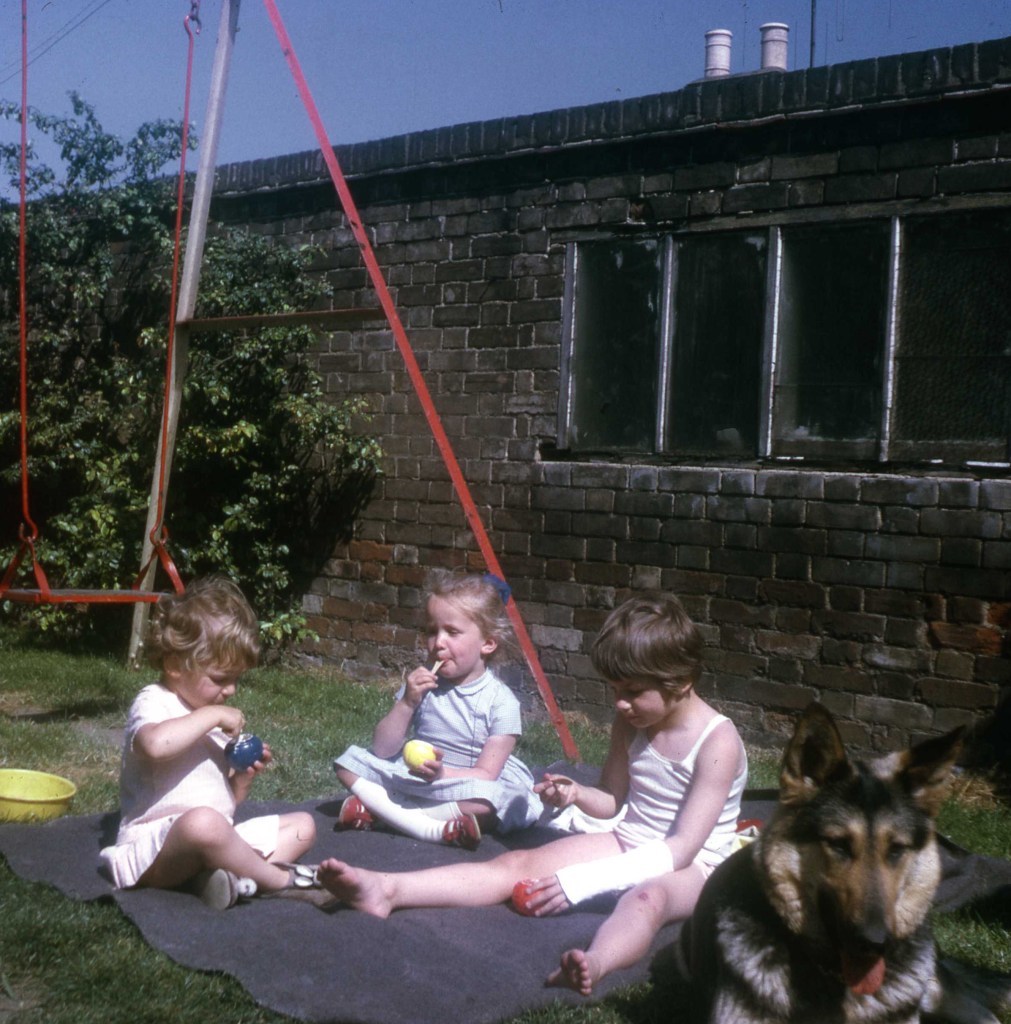
Sheba was a beautiful German Shepherd dog that we got when I was a toddler, probably after Dinah was born. She was the gentlest and best-behaved dog imaginable, and was wonderful with us children. She lived mostly outside; her run was spacious and had a roomy outdoor section on the side of the shed, accessible from the garden, as well as the indoor part. She wasn’t shut in very often, and was frequently out in the garden keeping us company. She was powerful and protective; once she leapt right over the garden gate (6 foot high?) because she felt threatened. She had to be put to sleep because she went totally blind and couldn’t really manage; I can still see mum going out with her, walking past the living-room window with Sheba on the lead, and coming back without her, heartbroken and trying not to show it.
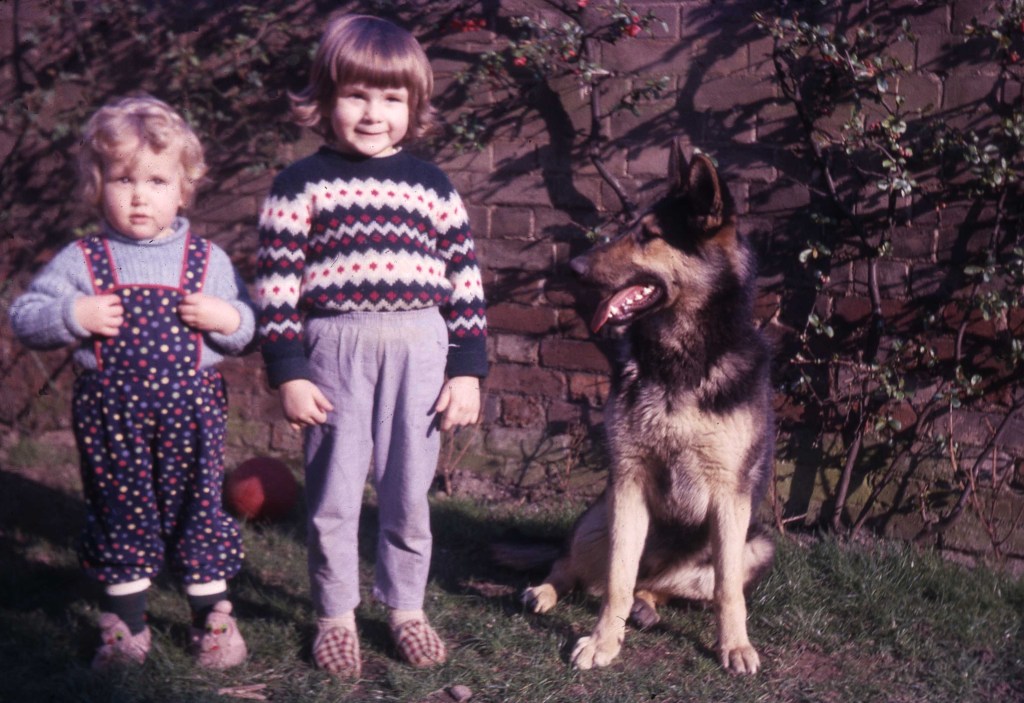
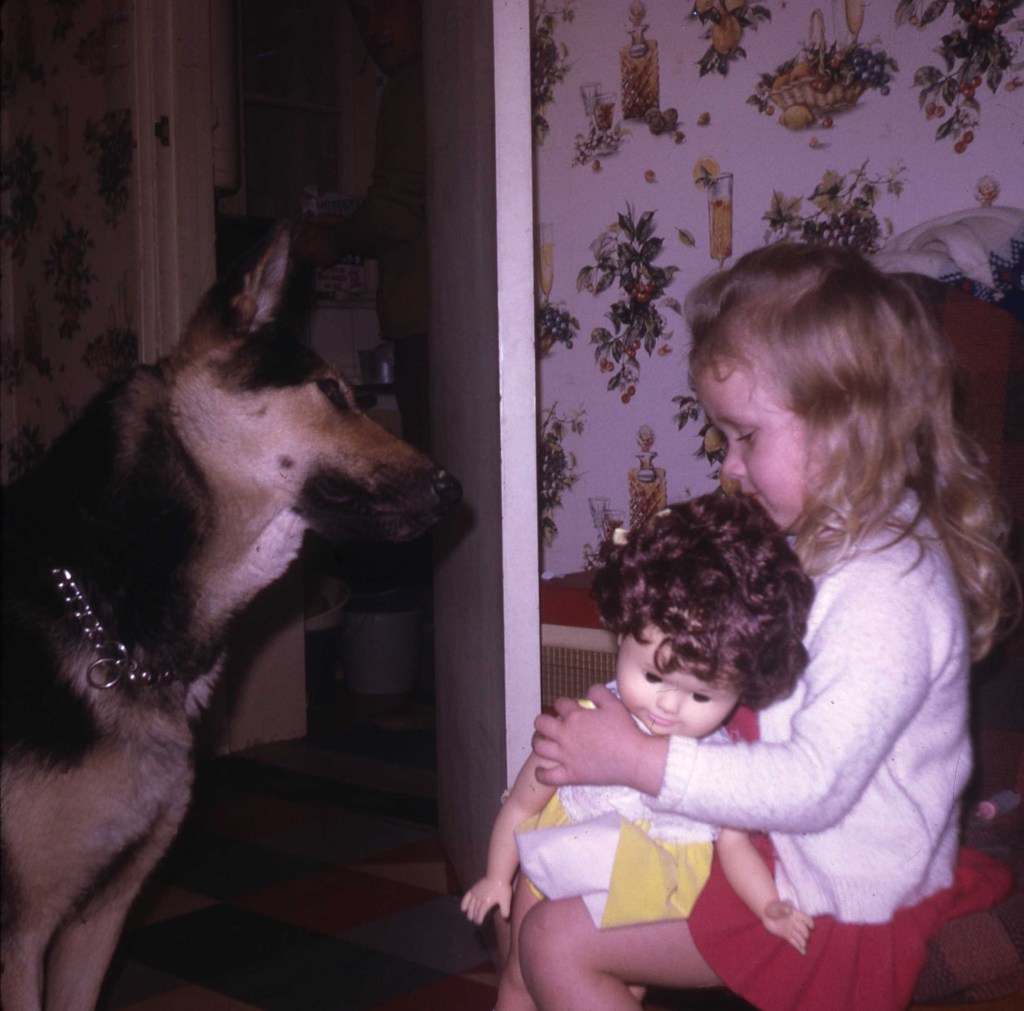
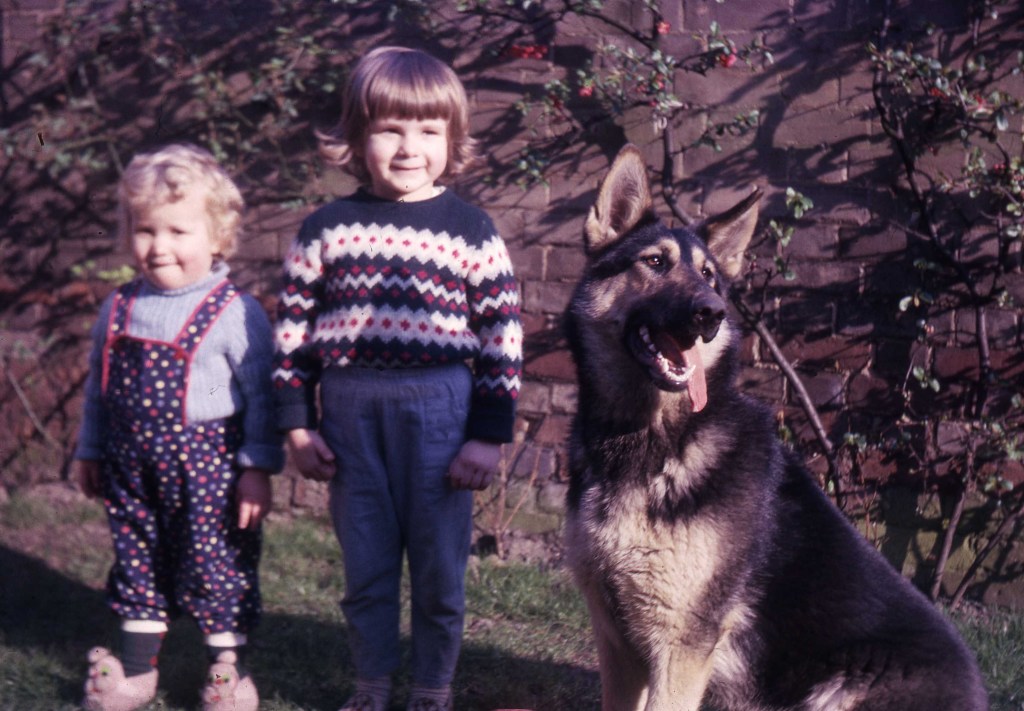
The garden was roughly L-shaped, around two sides of the house. Towards the front of the house, opening out to the road, there was a one-car garage between the garden gate and the pub next door. I’m sure we had a number of different cars, but the one I can see in the garage was a blue Morris Minor Traveller. Its distinctive wooden frame at the back, and the retractable indicator arms that sprung out at the sides (put the winker on, dad!) were wonderful. You could enter the garage from the garden; there was a small door at the side.
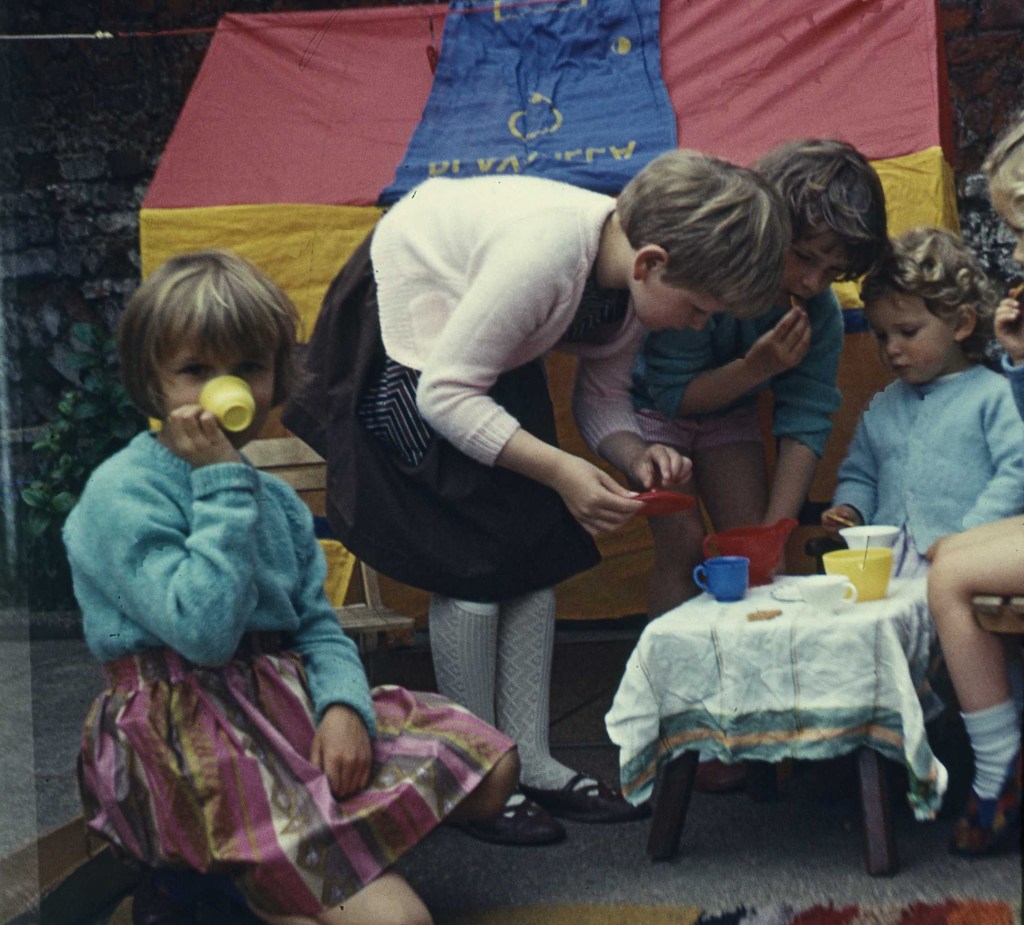
The tiny lawn backed on to the garage. Concrete pathways joined everything together, and we’d ride tricycles or scooters, or push dolly prams around these little roads. Sometimes, we’d have friends round to play, and mum would erect a little Wendy-house in front of the kitchen. We had tiny chairs and stools to sit on, and a little tea-set so we could play house!
We weren’t allowed to play in the street, even though it was a cul-de-sac and most of our neighbours’ children were out there. Perhaps when I was older the rule was relaxed a little; street friends included Jane Monk, Elizabeth Montgomery, Carolyn Ranson, and Peter Death (De’ath). Cherry and Vanessa Harvey lived in Upper East Street, a short walk away.
Opposite our house, in a detached bungalow on the corner plot, lived Mr and Mrs Poulson. They were already elderly when I was a child. They kept a vegetable garden and occasionally I would go there and be given carrots or potatoes. Mum made the most wonderful thick root vegetable soup in the winter which would often be our main meal of the day.
I know mum and dad weren’t too happy about the house being next door to the pub, the Black Horse, and I think more than once pub customers came in through our garden gate looking for the toilet, but I don’t remember any disturbances. At the bottom of the road, just opposite on East Street, was Sepping’s butcher’s, with green and cream tile outside and slaughtered animals hanging in and over the windows. Just around the corner on East Street, going towards the town centre, there were a couple of small and very ancient shops. One of them sold vegetables, among other things, and at least once I was sent there to get carrots in exchange for a thrupenny bit. I think the same shop had bins of loose biscuits, too. Anything you bought would be weighed and wrapped in a brown paper bag, no plastic anywhere.
 Fading Memories